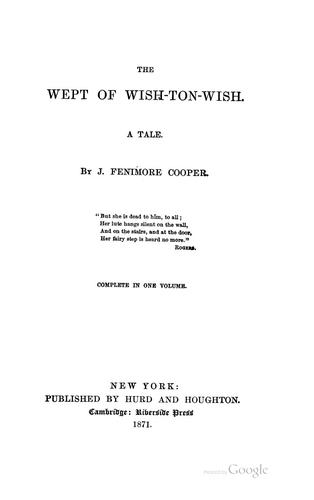
Historical fiction; King Philip's War, 1675-1676 -- Fiction; War stories
Notwithstanding the suddenness of this interruption, and the extraordinary
fracas with which it was accompanied, he, who might be supposed to be most
affected by it, manifested none of the usual symptoms of fear or surprise.
He listened intently, until the last sound had died away, but it was with
expectation rather than with alarm. Arising slowly, he looked warily about
him, and then walking with a quick step along the ledge which led to his
hut, he disappeared through its door. In another minute, however, he was
again seen at his former post; a short carabine, such as was then used by
mounted warriors, lying across his knee. If doubt or perplexity beset the
mind of this individual, at so palpable a sign that the solitude he
courted was in danger of being interrupted, it was not of a nature
sufficiently strong to disturb the equanimity of his aspect. A second time
the branches rustled, and the sounds proceeded from a lower part of the
precipice as if the foot that caused the disturbance was in the act of
descending. Though no one was visible the nature of the noise could no
longer be mistaken. It was evidently the tread of a human foot, for no
beast of a weight sufficient to produce so great an impression, would have
chosen to rove across a spot where the support of hands was nearly as
necessary as that of the other limbs.
"Come forward!" said he who in all but the accessories of dress and
hostile preparation might so well be termed a hermit--"I am already here."
The words were not given to the air, for one suddenly appeared on the
ledge at the side next the settlement, and within twenty feet of the
speaker. When glance met glance, the surprise which evidently took
possession of the intruder and of him who appeared to claim a better right
to be where they met, seemed mutual. The carabine of the latter, and a
musket carried by the former, fell into the dangerous line of aim at the
same instant, and An a moment they were thrown upwards again, as if a
common impulse controlled them. The resident signed to the other to draw
nigher, and, then every appearance of hostility disappeared in that sort
of familiarity which confidence begets.
"How is it," said the former to his guest, when both were calmly seated
behind the little screen of stones, "that thou hast fallen upon this
secret place? The foot of stranger hath not often trod these rocks, and no
man before thee hath ever descended the precipice."
"A moccason is sure," returned the other with Indian brevity. "My father
hath a good eye. He can see very far from the door of his lodge."
"Thou knowest that the men of my color speak often to their Good Spirit,
and they do not love to ask his favor in the highways. This place is
sacred to his holy name."
Public-domain text, read in full here on John Shaqi.
Reviews
Reviews
No reviews yet
Be the first to share your thoughts on this work.
Elsewhere in the archive
Join the Discussion
Join the discussion
Sign in to leave a comment or review.
Sign InorCreate an account