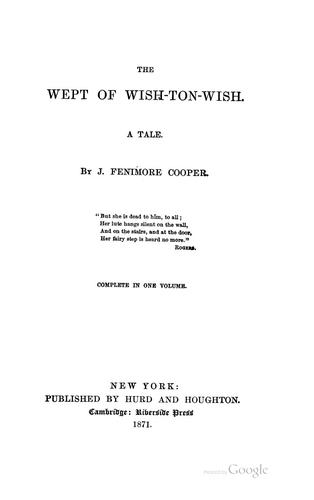
Historical fiction; King Philip's War, 1675-1676 -- Fiction; War stories
The intruder was the young Sachem of the Narragansetts, and he who,
notwithstanding this plausible apology, so palpably sought secrecy rather
than solitude was the man that has often been introduced into these pages
under the shade of mystery. The instant recognition and the mutual
confidence require no further explanation, since enough has already been
developed in the course of the narrative, to show that they were no
strangers to each other. Still the meeting had not taken place without
uneasiness on the one part, and great though admirably veiled surprise on
the other. As became his high station and lofty character, the bearing of
Conanchet betrayed none of the littleness of a vulgar curiosity. He met
his ancient acquaintance with the calm dignity of his rank, and it would
have been difficult for the most inquiring eye to have detected a
wandering glance, a single prying look, or any other sign that he deemed
the place at all extraordinary for such an interview. He listened to the
little explanation of the other, with grave courtesy, and suffered a short
time to elapse before he made any reply.
"The Manitou of the pale-men," he then said "should be pleased with my
father. His words are often in the ears of the Great Spirit! The trees and
the rocks know them."
"Like all of a sinful and fallen race," returned the stranger with the
severe air of the age, "I have much need of my askings. But why dost thou
think that my voice is so often heard in this secret place?"
The finger of Conanchet pointed to the worn rock at his feet, and his eye
glanced furtively at the beaten path which led between the spot and the
door of the lodge.
"A Yengeese hath a hard heel, but it is softer than stone. The hoof of the
deer would pass many times, to leave such a trail."
"Thou art quick of eye, Narragansett, and yet thy judgment may be
deceived. My tongue is not the only one that speaketh to the God of
my people."
The Sachem bent his head slightly, in acquiescence, as if unwilling to
press the subject. But his companion was not so easily satisfied, for he
felt the consciousness of a fruitless attempt at deception goading him to
some plausible means of quieting the suspicions of the Indian.
"That I am now alone, may be matter of pleasure or of accident," he added;
"thou knowest that this hath been a busy and a bloody day among the
pale-men, and there are dead and dying in their lodges. One who hath no
wigwam of his own may have found time to worship by himself."
"The mind is very cunning," returned Conanchet; "it can hear when the ear
is deaf--it can see when the eye is shut. My father hath spoken to the
Good Spirit, with the rest of his tribe."
Public-domain text, read in full here on John Shaqi.
Reviews
Reviews
No reviews yet
Be the first to share your thoughts on this work.
Elsewhere in the archive
Join the Discussion
Join the discussion
Sign in to leave a comment or review.
Sign InorCreate an account