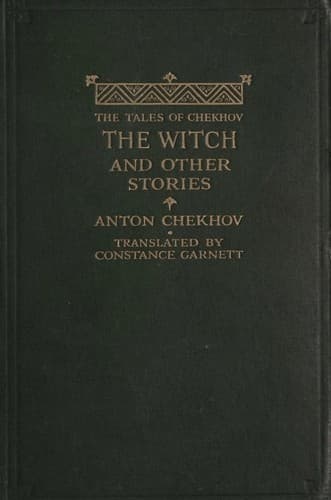
The Witch, and Other StoriesChekhov, Anton Pavlovich
General
The Witch, and Other Stories
Chekhov, Anton Pavlovich
Chekhov, Anton Pavlovich, 1860-1904 -- Translations into English; Russia -- Social life and customs -- Fiction; Short stories
“Yes, miss. My husband was a waiter at the Slavyansky Bazaar. And this
is my daughter,” she said, indicating Sasha, who was cold and huddling
up to her. “She is a Moscow girl, too.”
The two young ladies said something in French to the student, and he
gave Sasha a twenty-kopeck piece.
Old Father Osip saw this, and there was a gleam of hope in his face.
“We must thank God, your honour, there was no wind,” he said, addressing
the student, “or else we should have been all burnt up together. Your
honour, kind gentlefolks,” he added in embarrassment in a lower tone,
“the morning’s chilly... something to warm one... half a bottle to your
honour’s health.”
Nothing was given him, and clearing his throat he slouched home. Olga
stood afterwards at the end of the street and watched the two carts
crossing the river by the ford and the gentlefolks walking across the
meadow; a carriage was waiting for them the other side of the river.
Going into the hut, she described to her husband with enthusiasm:
“Such good people! And so beautiful! The young ladies were like
cherubim.”
“Plague take them!” Fyokla, sleepy, said spitefully.
VI
Marya thought herself unhappy, and said that she would be very glad to
die; Fyokla, on the other hand, found all this life to her taste: the
poverty, the uncleanliness, and the incessant quarrelling. She ate what
was given her without discrimination; slept anywhere, on whatever came
to hand. She would empty the slops just at the porch, would splash them
out from the doorway, and then walk barefoot through the puddle. And
from the very first day she took a dislike to Olga and Nikolay just
because they did not like this life.
“We shall see what you’ll find to eat here, you Moscow gentry!” she said
malignantly. “We shall see!”
One morning, it was at the beginning of September, Fyokla, vigorous,
good-looking, and rosy from the cold, brought up two pails of water;
Marya and Olga were sitting meanwhile at the table drinking tea.
“Tea and sugar,” said Fyokla sarcastically. “The fine ladies!” she
added, setting down the pails. “You have taken to the fashion of
tea every day. You better look out that you don’t burst with your
tea-drinking,” she went on, looking with hatred at Olga. “That’s how
you have come by your fat mug, having a good time in Moscow, you lump of
flesh!” She swung the yoke and hit Olga such a blow on the shoulder that
the two sisters-in-law could only clasp their hands and say:
“Oh, holy Saints!”
Then Fyokla went down to the river to wash the clothes, swearing all the
time so loudly that she could be heard in the hut.
The day passed and was followed by the long autumn evening. They wound
silk in the hut; everyone did it except Fyokla; she had gone over the
river. They got the silk from a factory close by, and the whole family
working together earned next to nothing, twenty kopecks a week.
Public-domain text, read in full here on John Shaqi.
Reviews
Reviews
No reviews yet
Be the first to share your thoughts on this work.
Elsewhere in the archive
Join the Discussion
Join the discussion
Sign in to leave a comment or review.
Sign InorCreate an account