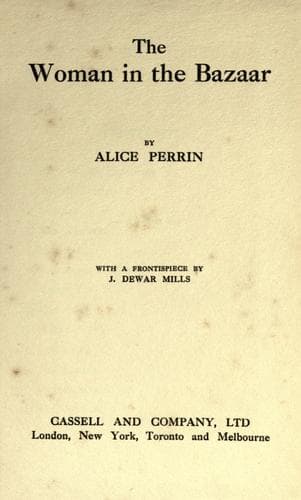
British -- India -- Fiction; India -- Social life and customs -- Fiction
To-day he had arrived just as Rafella was about to start for the church,
enveloped in a macintosh, holding a monstrous cotton umbrella over her
head; and for the last hour he had sat patiently in a pew while school
children droned out hymns around Rafella and the harmonium, staring at
him throughout the performance with unblinking curiosity.
Now the children had clattered away, Rafella had closed the harmonium
and put everything straight, and they were alone in the porch; the
church door, covered with notices, was closed behind them, and in front
the rain streamed down on the huddled graves, the sunken, lichen-stained
headstones, and the old-fashioned, coffin-shaped tombs.
The supreme moment had come when, in spite of the place and the weather,
George Coventry felt he could be silent no longer. There was little
doubt in his mind as to Rafella's feelings towards himself, there could
be no doubt in hers as to his intentions; he had made them plain enough
almost from the first.
It was very soon over. He had spoken, he had kissed her with passion yet
reverence; she had trembled, shed a few tears, confessed that she cared
for him. And then, as he had all along apprehended, came the protest,
when he urged a short engagement, that she could not leave her father.
"It would be wicked of me to leave him by himself," she cried in tearful
distress. "He could never get on without me. I think it would kill him,
and I should never forgive myself."
"It would be wicked of _him_ to want to keep you always," said Coventry
firmly. He was prepared, within reason, to compromise, but he was also
determined not to be beaten. "The moment we get back to the vicarage
I'll interview him in his den. That was where you saw me first. Do you
remember, little angel saint? You looked through the window, and I fell
in love with your darling face, as I had already fallen in love with
your hair and your voice. I say, couldn't we have that hymn at our
wedding?
"'_Other refuge have I none;
Hangs my helpless soul on Thee._'"
He sang the words joyfully, quite out of tune, for he was no musician.
"Oh, no. It wouldn't be suitable at all," she said, rebuke in her voice.
"I should say it was most appropriate, for I am going to comfort and
protect you as long as I live."
"But it's not meant that way," she explained, shocked. "And, oh," she
went on miserably, "you mustn't count on our being married. I feel
dreadful about it all. I don't know _what_ father would do without me. I
can't think of going so far away and leaving him alone. Don't ask him;
don't say anything about it."
Public-domain text, read in full here on John Shaqi.
Reviews
Reviews
No reviews yet
Be the first to share your thoughts on this work.
Join the Discussion
Join the discussion
Sign in to leave a comment or review.
Sign InorCreate an account