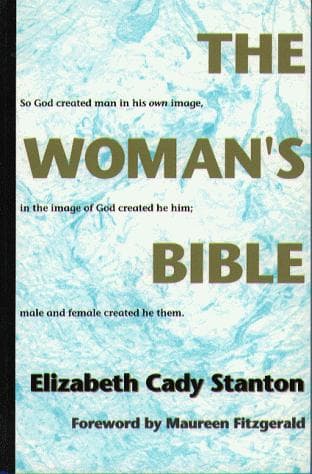
Bible -- Commentaries; Bible -- Feminist criticism; Women in the Bible
I would recommend these texts to the consideration of the Bishops in
the English House of Lords. If a man may marry a deceased brother's
wife, why not a deceased wife's sister? English statesmanship has
struggled with this problem for generations, and the same old
platitudes against the deceased wife's sister's bill are made to do
duty annually in Parliament.
Deuteronomy xxviii.
56 The tender and delicate woman among you, which would not adventure
to set the sole of her foot upon ground for delicateness and
tenderness, her eye shall be evil toward her husband of her bosom, and
toward her son, and toward her daughter, and toward her children which
she shall bear; for she shall eat them for want of all things secretly
in the siege and straitness, wherewith thine enemy shall distress thee
in thy gates.
64 Blessed shall be the fruit of thy body, and the fruit of thy
ground, and the fruit of thy cattle, the increase of thy kine, and the
flocks of thy sheep.
68 And the Lord shall bring thee into Egypt again with ships, by the
way whereof I spake unto thee, thou shalt see it no more again: and
there ye shall be sold unto your enemies for bondmen and bondwomen, and
no man shall buy you.
This is addressed to men as most of the injunctions are, as to their
treatment of woman in general. In enumerating the good things that
would come to Israel if the commandments were obeyed, nothing is
promised to women, but when the curses are distributed, woman comes in
for her share. Similar treatment is accorded the daughters of Eve in
modern days. She is given equal privileges with man, in being
imprisoned and hung, but unlike him she has no voice in the laws, the
judge, the jury, nor the manner of exit to the unknown land. She is
denied the right of trial by her own peers; the laws are made by men,
the courts are filled with men; the judge, the advocates, the jurors,
all men!
Moses follows the usual ancient idea that in the creation of human
life, man is the important factor. The child is his fruit, he is
the soul. The spirit the vital spark. The woman merely the earth that
warms and nourishes the seed, the earthly environment. This
unscientific idea still holds among people ignorant of physiology and
psychology. This notion chimes in with the popular view of woman's
secondary place in the world, and so is accepted as law and gospel. The
word "beget" applied only to men in Scripture is additional enforcement
of the idea that the creative act belongs to him alone. This is
flattering to male egoism and is readily accepted.
E. C. S.
Public-domain text, read in full here on John Shaqi.
Reviews
Reviews
No reviews yet
Be the first to share your thoughts on this work.
Elsewhere in the archive
Join the Discussion
Join the discussion
Sign in to leave a comment or review.
Sign InorCreate an account