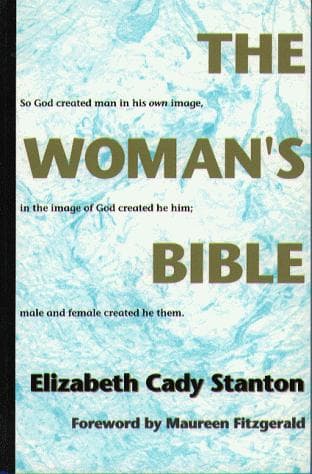
Bible -- Commentaries; Bible -- Feminist criticism; Women in the Bible
The name of God does not appear in this Song, neither is the latter
ever mentioned in the New Testament. This book has no special religious
significance, being merely a love poem, an epithalamium, sung on
nuptial occasions in praise of the bride and the groom. The proper
place for this book is before either Proverbs or Ecclesiastes, as it
was written in Solomon's youth, and is a more pardonable outburst for
his early days than for his declining years. The Jewish doctors advised
their young people not to read this book until they were thirty years
old, when they were supposed to be more susceptible to spiritual
beauties and virtues than to the mere attractions of face and of form.
The Church, as an excuse for retaining this book as a part of "Holy
Scriptures," interprets the Song as expressive of Christ's love for the
Church; but that is rather far-fetched, and unworthy the character of
the ideal Jesus. The most rational view to take of the Song is, it was
that of a luxurious king to the women of his seraglio.
E. C. S.
BOOKS OF ISAIAH AND DANIEL, MICAH AND MALACHI.
ISAIAH.
The closing books, of the Old Testament make but little mention of
women as illustrating individual characteristics. The ideal woman is
used more as a standard of comparison for good and for evil, the good
woman representing the elements of success in building up the family,
the tribe, the nation, as a devout worshiper of the God of Israel; the
wicked woman, the elements of destruction in the downfall of great
cities and nations. As woman is chosen to represent the extremes of
human conditions she has no special reason to complain.
The Prophets sum up the graces of the "daughters of men" in the
following texts:
Isaiah iii.
16 Moreover the Lord saith, Because the daughters of Zion are haughty,
and walk with stretched forth necks and wanton eyes, walking and
mincing as they go, and making a tinkling with their feet:
19 In that day the Lord will take away the bravery of their tinkling
ornaments about their feet, and their cauls, and their round tires like
the moon,
19 The chains, and the bracelets, and the mufflers,
20 The bonnets, and the ornaments of the legs, and the headbands, and
the tablets, and the earrings,
21 The rings, and nose jewels,
22 The changeable suits of apparel, and the mantles, and the wimples,
and the crisping pins,
23 The glasses, and the fine linen, and the hoods, and the vails.
Public-domain text, read in full here on John Shaqi.
Reviews
Reviews
No reviews yet
Be the first to share your thoughts on this work.
Elsewhere in the archive
Join the Discussion
Join the discussion
Sign in to leave a comment or review.
Sign InorCreate an account