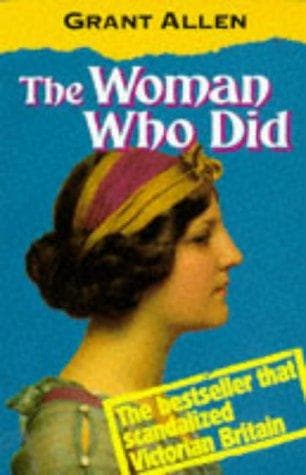
Domestic fiction; England -- Fiction; Feminists -- Fiction; Mothers and daughters -- Fiction; Women -- England -- Fiction
Still, Alan Merrick was now “getting on in his profession,” and, as
people said, it was high time he should be settled. They said it as
they might have said it was high time he should take a business
partner. From that lowest depth of emotional disgrace Herminia Barton
was to preserve him. It was her task in life, though she knew it not,
to save Alan Merrick’s soul. And nobly she saved it.
Alan, “looking about him,” with some fine qualities of nature
underlying in the background that mean social philosophy of the class
from which he sprang, fell frankly in love almost at first sight with
Herminia. He admired and respected her. More than that, he understood
her. She had power in her purity to raise his nature for a time to
something approaching her own high level. True woman has the real Midas
gift: all that she touches turns to purest gold. Seeing Herminia much
and talking with her, Alan could not fail to be impressed with the idea
that here was a soul which could do a great deal more for him than
“make him comfortable,”—which could raise him to moral heights he had
hardly yet dreamt of—which could wake in him the best of which he was
capable. And watching her thus, he soon fell in love with her, as few
men of thirty are able to fall in love for the first time—as the young
man falls in love, with the unselfish energy of an unspoilt nature. He
asked no longer whether Herminia was the sort of girl who could make
him comfortable; he asked only, with that delicious tremor of
self-distrust which belongs to naïve youth, whether he dare offer
himself to one so pure and good and beautiful. And his hesitation was
justified; for our sordid England has not brought forth many such
serene and single-minded souls as Herminia Barton.
At last one afternoon they had climbed together the steep red face of
the sandy slope that rises abruptly from the Holmwood towards Leith
Hill, by the Robin Gate entrance. Near the top, they had seated
themselves on a carpet of sheep-sorrel, looking out across the
imperturbable expanse of the Weald, and the broad pastures of Sussex. A
solemn blue haze brooded soft over the land. The sun was sinking low;
oblique afternoon lights flooded the distant South Downs. Their combes
came out aslant in saucer-shaped shadows. Alan turned and gazed at
Herminia; she was hot with climbing, and her calm face was flushed. A
town-bred girl would have looked red and blowsy; but the colour and the
exertion just suited Herminia. On that healthy brown cheek it seemed
natural to discern the visible marks of effort. Alan gazed at her with
a sudden rush of untrammelled feeling. The elusive outline of her grave
sweet face, the wistful eyes, the ripe red mouth enticed him. “Oh,
Herminia,” he cried, calling her for the first time by her Christian
name alone, “how glad I am I happened to go that afternoon to Mrs
Dewsbury’s. For otherwise perhaps I might never have known you.”
Public-domain text, read in full here on John Shaqi.
Reviews
Reviews
No reviews yet
Be the first to share your thoughts on this work.
Join the Discussion
Join the discussion
Sign in to leave a comment or review.
Sign InorCreate an account