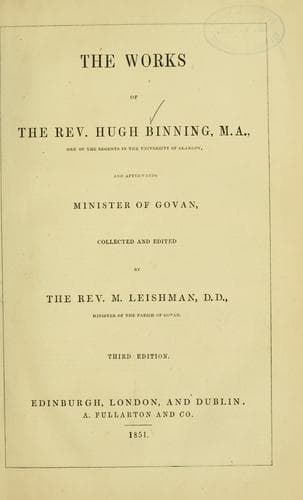
Presbyterian Church -- Sermons; Sermons, English; Theology -- Early works to 1800; Theology -- History -- 17th century
a king, and hath a throne to judge the world and plead the cause of the
poor sheep, I will appeal to him, refer the cause to his decision, I will
make my supplication to him, and certainly he will hear, and interpose
himself between wrath and me. He will rescind this sentence of
condemnation, since he himself was condemned for us and is justified,—‘It
is Christ that died, yea rather that is risen again,’ who shall condemn
me? He is near that justifies me, Rom. viii. 33, 34.” Now if thou do
indeed flee unto him for refuge, that city is open for thee, and nothing
to prejudge thy entry. But no curse, no condemnation can enter in it, Rom.
viii. 1. He will justify and absolve thee from all things whereof the law
could not justify thee, but condemn thee. There is forgiveness with him,
that he may be feared. David may teach thee this manner of application,
(Psal. cxxx. and cxlii. 2) of appealing from the deserved curse, to free
undeserved blessing and mercy in Christ.
Let us consider this name of the Lord, and it shall answer all our
suspicions of him,—all our objections against coming to him and believing
in him. It is certain, ignorance is the mother of unbelief, together with
the natural perverseness of our hearts. If we knew his name, we would
trust in him; if his names were pondered and considered, we would believe
in him. Satan knows this, and therefore his great sleight and cunning is
to hold our minds fixed on the consideration of our misery and desperate
estate. He keeps the awakened conscience still upon that comfortless
sight, and he labours to represent God by halves, and that it is a false
representation of God. He represents him as clothed with justice and
vengeance,—as a consuming fire, in which light a soul can see nothing but
desperation written; and he labours to hold out the thoughts of his mercy
and grace, or diverts a soul from the consideration of his promises;
whence it comes, that they are not established, that though salvation be
near, yet it is far from them in their sense and apprehension. Therefore I
say, you should labour to get an entire sight of God, and you shall see
him best in his word, where he reveals himself, and there you find, if you
consider, that which may make you fear him indeed, but never flee from
him,—that which may abase you, but withal embolden you to come to him
though trembling. Whatever thought possess thee of thine own misery, of
thy own guiltiness, labour to counterpoise that with the thought of his
mercy and free promises. Whatever be suggested of his holiness and
justice, hear himself speak out his own name, and thou shall hear as much
of mercy and grace as may make these not terrible unto thee, though high
and honourable. The Lord hath so framed the expression and proclamation of
his name in this place, that first a word of majesty and power is
premised,—“the Lord, the Lord God,”—that it may compose our hearts in fear
and reverence of such a glorious one, and make a preparatory impression of
Public-domain text, read in full here on John Shaqi.
Reviews
Reviews
No reviews yet
Be the first to share your thoughts on this work.
Elsewhere in the archive
Join the Discussion
Join the discussion
Sign in to leave a comment or review.
Sign InorCreate an account