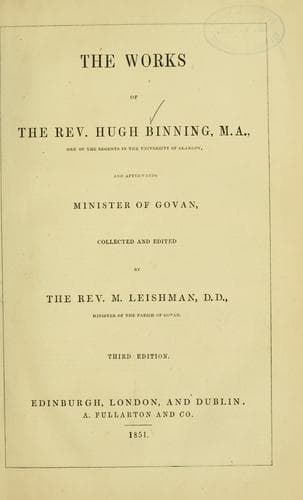
Presbyterian Church -- Sermons; Sermons, English; Theology -- Early works to 1800; Theology -- History -- 17th century
But what if I should say, that the most part of your worship, even that
which is commanded of God, as prayer, hearing, reading, &c., hath no truth
in it, I should say nothing amiss. For though you do those things that are
commanded, yet not as commanded, without any respect to divine
appointment; and only because you have received them as traditions from
your fathers, and because you are taught so by the precepts of men, and
are accustomed so to do: therefore the stamp of God’s will and pleasure is
not engraven on them, but of your own will, or of the will of men. Let me
pose(138) your consciences, many of you, what difference is there between
your praying and your plowing; between your hearing, and your harrowing;
between your reading in the Scriptures, and your reaping in the harvest;
between your religious service and your common ordinary actions; I say,
what difference is there in the rise of these? You do many civil things
out of custom, or because of the precepts of men; and is there any other
principle at the bottom of your religious performances? Do you at all
consider these are divine appointments,—these have a stamp of his
authority on them? And from the conscience of such an immediate command of
God, and the desire to please him and obey him, do you go about these? I
fear many cannot say it. O, I am sure all cannot, though it may be all
will say it. Therefore your religious worship can come in no other account
than will-worship, or man-worship. It hath not the stamp of truth on
it,—an express conformity to the truth of God as his truth.
Public-domain text, read in full here on John Shaqi.
Reviews
Reviews
No reviews yet
Be the first to share your thoughts on this work.
Elsewhere in the archive
Join the Discussion
Join the discussion
Sign in to leave a comment or review.
Sign InorCreate an account