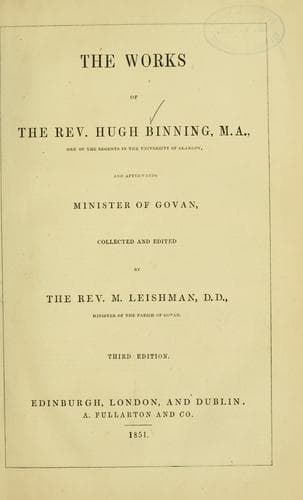
Presbyterian Church -- Sermons; Sermons, English; Theology -- Early works to 1800; Theology -- History -- 17th century
religion, know, that it is one mind and purpose that hath linked the end
and the means together as a chain—and therefore, if thou expectest to be
saved according to election, thou must, according to the same counsel,
make thy calling home from sin to God sure.
Thirdly, What thing soever he hath purposed, he in due time applies to the
performance of it, and then the counsel of his will becomes the works of
his hands, and there is an admirable harmony and exact agreement between
these two. All things come out of the womb of his eternal decree, by the
word of his power, even just fashioned and framed as their lineaments and
draughts were proportioned in the decree, nothing failing, nothing
wanting, nothing exceeding. There is nothing in the idea of his mind but
it is expressed in the work of his hands. There are no raw half wishes in
God. Men have such imperfect desires—I would have, or do such a thing if
it were not, &c. He wavers not thus in suspense, but what he wills and
desires, he wills and desires indeed. He intends, doubtless, it shall be
and what he intends he will execute and bring to pass, therefore his will
in due time applies almighty power to fulfil the desire of it, and
almighty power being put to work by his will, it cannot but work all
things “according to the counsel of his will,” and whatsoever his soul
desireth, that he cannot but do, even as he desires seeing he can do it.
If he will do it, and can do it, what hinders him to work and do? Know
then that his commands and precepts to you signifying what is your duty
they do not so much signify what he desires or intends to work, or have
done, as his approbation of such a thing in itself to be your duty, and
therefore though he have revealed his will concerning our duty, though no
obedience follow, yet is not his intention frustrated or disappointed, for
his commands to you say not what is his intention about it, but what is
that which he approves as good, and a duty obliging men. But whatsoever
thing he purposes and intends should be, certainly he will do it, and make
it to be done. If it be a work of his own power alone, himself will do it
alone. If he require the concurrence of creatures to it,—as in all the
works of providence,—then he will effectually apply the creatures to his
work, and not wait in suspense on their determination. If he have
appointed such an end to be attained by such means,—if he have a work to
do by such instruments,—then, without all doubt, he will apply the
instruments when his time comes, and will not wait on their concurrence.
You see now strange things done, you wonder at them how we are brought
down from our excellency,—how our land is laid desolate by strangers,—how
many instruments of the Lord’s work are laid aside, how he lifts up a rod
of indignation against us, and is like to overturn even the foundations of
our land,—all(145) were not in our mind before, but they were in his mind
from eternity, and therefore he is now working it.
Public-domain text, read in full here on John Shaqi.
Reviews
Reviews
No reviews yet
Be the first to share your thoughts on this work.
Elsewhere in the archive
Join the Discussion
Join the discussion
Sign in to leave a comment or review.
Sign InorCreate an account