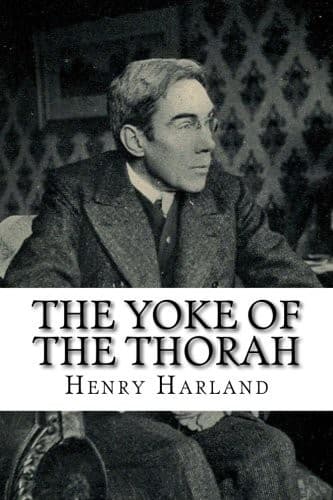
Jews -- Fiction; Man-woman relationships -- Fiction; New York (N.Y.) -- Fiction
“Well,” he continues, “after this reawakening, what of my life?
Externally my life went on precisely as before. I was married. I had
married of my own free will. I knew that, however detestable my marriage
might now have become to me, I was bound in all honor and decency not
to do any thing that could make my wife unhappy. I had already done
mischief enough in the world. I must not, if I could help it, do any
more. I must keep my secret. Though all the forces of my body and soul
were sucked up and concentrated in that one fierce secret, as they were,
I must not let it appear. So, the relations between my wife and myself
went on precisely as before; and I tried to be a good husband to her,
and to give her what pleasure, and spare her what pain, I could. The
same theaters, dinners, parties; the same talk about dresses, the same
piano playing. Sometimes, even while, with as much nonchalance of manner
as I could master, I was listening to her prattle, my secret would be
burning so hot in my breast, it was a wonder to me that she did not
guess it, or suspect it--that she did not _feel_ it. Sometimes, even
while I was directly speaking to her, answering some question that
she had asked me, or what not, my heart was being wrung by such strong
emotions, it seemed as though she could not help but divine them. It was
hard work, keeping this constant guard over myself, wearing this mask.
But, of course, I was in duty bound to wear it. The relief was immense
when I could get away by myself, and let it drop off. Away by myself, I
could, any how, _be_ myself--lead my own life, without dissembling.
Public-domain text, read in full here on John Shaqi.
Reviews
Reviews
No reviews yet
Be the first to share your thoughts on this work.
Elsewhere in the archive
Join the Discussion
Join the discussion
Sign in to leave a comment or review.
Sign InorCreate an account