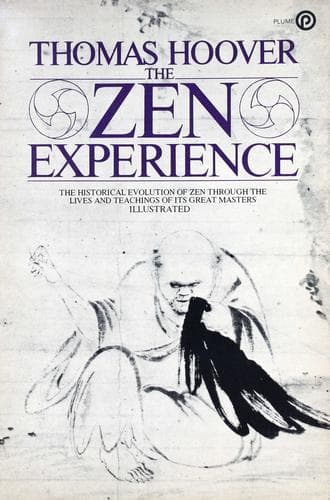
There is a Zen legend that a bearded Indian monk named Bodhidharma (ca.
470-532), son of a South Indian Brahmin king, appeared one day at the
southern Chinese port city of Canton, sometime around the year 520.
From there he traveled northeast to Nanking, near the mouth of the
Yangtze River, to honor an invitation from China's most devout
Buddhist, Emperor Wu of the Liang Dynasty. After a famous interview in
which his irreverence left the emperor dismayed, Bodhidharma pressed
onward to the Buddhist centers of the north, finally settling in at the
Shao-lin monastery on Mt. Sung for nine years of meditation staring at
a wall. He then transmitted his insights and a copy of the Lankavatara
sutra to a successor and passed on--either physically, spiritually, or
both. His devotion to meditation and to the aforementioned sutra were
his legacies to China. He was later honored as father of the Chinese
_Dhyana_, or "Meditation," school of Buddhism, called Ch'an.
Bodhidharma attracted little notice during his years in China, and the
first historical account of his life is a brief mention in a chronicle
compiled well over a hundred years after the fact, identifying him
merely as a practitioner of meditation. However, later stories of his
life became increasingly embellished, as he was slowly elevated to the
office of First Patriarch of Chinese Ch'an. His life was made to
fulfill admirably the requirements of a legend, as it was slowly
enveloped in symbolic anecdotes illustrating the truth more richly than
did mere fact. However, most scholars do agree that there actually was
a Bodhidharma, that he was a South Indian who came to China, that he
practiced an intensive form of meditation, and that a short treatise
ascribed to him is probably more or less authentic. Although the legend
attached to this unshaven Indian Buddhist tells us fully as much about
early Ch'an as it does about the man himself, it is nonetheless the
first page in the book of Zen.
_[Bodhidharma], the Teacher of the Law, was the third son of a great
Brahmin king in South India, of the Western Lands. He was a man of
wonderful intelligence, bright and far-reaching; he thoroughly
understood everything that he had ever learned. As his ambition was to
master the doctrine of the Mahayana, he abandoned the white dress of a
layman and put on the black robe of monkhood, wishing to cultivate the
seeds of holiness. He practiced contemplation and tranquillization; he
knew well what was the true significance of worldly affairs. Inside and
outside he was transpicuous; his virtues were more than a model to the
world. He was grieved very much over the decline of the orthodox
teaching of the Buddha in the remoter parts of the earth. He finally
made up his mind to cross over land and sea and come to China and
preach his doctrine in the kingdom of Wei.1
_
Public-domain text, read in full here on John Shaqi.
Reviews
Reviews
No reviews yet
Be the first to share your thoughts on this work.
Join the Discussion
Join the discussion
Sign in to leave a comment or review.
Sign InorCreate an account