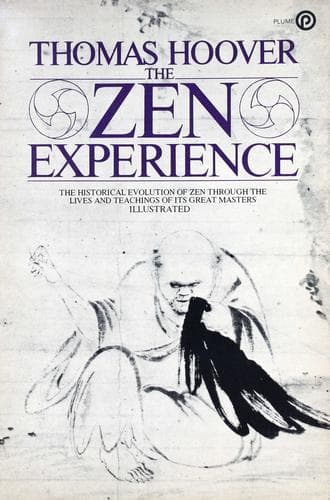
Perhaps the evolution of Zen is best demonstrated by the slow change in
the paintings of Bodhidharma, culminating in the latter-day portrayals
of him as a scowling grump. His image became successively more
misanthropic through the centuries, perhaps as a way of underscoring
the later Zen practice of establishing a rather dehumanized
relationship between the Zen master and pupil, as the master shouts,
beats a monk, and destroys his ego through merciless question-and-
answer sessions. For all we know, the "wall-gazing Brahmin" of ancient
China may have had a wry smile to go along with his droll sense of
humor. Perhaps it is fitting to close with the most lasting apocrypha
associated with his name, to wit the stanza that later masters
attributed to him as an alleged summary of his teaching, but which he,
promulgator of the Lankavatara Sutra, would undoubtedly have disowned:
_A special transmission outside the sutras;
No reliance upon words and letters;
Direct pointing to the very mind;
Seeing into one's own nature._
Chapter Two
HUI-K'O: SECOND PATRIARCH OF ZEN
Hui-k'o (487-593) first enters the history of Zen as an eager Chinese
scholar devoted to meditation. Wishing to become a disciple of the
famous Indian monk who had recently installed himself at the Shao-lin
monastery, Hui-k'o set up a vigil outside the gate. Time passed and the
snows began to fall, but still Bodhidharma ignored him, declaring, "The
incomparable doctrine of Buddhism can only be comprehended after a long
hard discipline, by enduring what is most difficult to endure and by
practicing what is most difficult to practice. Men of inferior virtue
are not allowed to understand anything about it."1 Finally Hui-k'o
despaired and resorted to an extreme measure to demonstrate his
sincerity: he cut off his own arm and offered it to the master. (This
act reportedly has been repeated since by an occasional
overenthusiastic Zen novice.) Even a singleminded master of meditation
like Bodhidharma could not ignore such a gesture, and he agreed to
accept Hui-k'o as his first Chinese disciple.
Unlike Bodhidharma, Hui-k'o is not a mysterious, legendary figure, but
rather is remembered by a detailed history that interacts periodically
with known events in Chinese history.2 He came from the Chi family and
was originally named Seng-k'o, only later becoming known as Hui-k'o.
The most reliable report has him coming from Wu-lao, with a reputation
as a scholarly intellectual preceding him. Indeed he seems to have been
a Chinese scholar in the finest sense, with a deep appreciation of all
three major philosophies: Confucianism, Taoism, and Buddhism. It was
toward the last, however, that he
Public-domain text, read in full here on John Shaqi.
Reviews
Reviews
No reviews yet
Be the first to share your thoughts on this work.
Join the Discussion
Join the discussion
Sign in to leave a comment or review.
Sign InorCreate an account