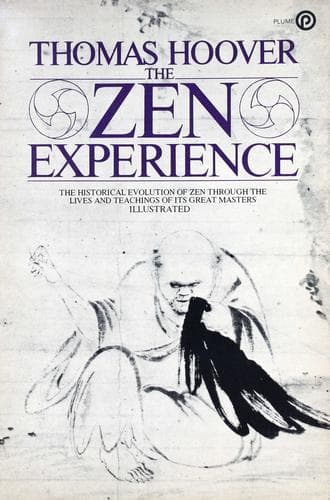
An even more elusive figure is the hermit Han-shan, whose name means
"Cold Mountain," the site where he supposedly resided. He is an almost
totally lengendary character, for we actually know nothing for sure
about when he lived (the current best guess is late eighth to early
ninth century). Almost everything known about him has been gleaned from
his poems and from a presumably contemporaneous preface to these poems
composed by a mysterious hand untraceable to any historical Chinese
individual. His was some of the most confessional, yet joyous, verse
penned in T'ang China, and he has been claimed by the Ch'anists as one
of theirs--although he might just as easily have been a Taoist
conversant in Buddhist jargon. Han-shan embodied the archetypal hero of
the Chinese imagination: a member of the rural gentry who gave up his
staid family life and some sort of scholarly career to become a
wandering poet. As he describes his own early life in the years before
his wanderings:
_From my father and mother I inherited land enough
And need not envy others' orchards and fields
Creak, creak goes the sound of my wife's loom;
Back and forth my children prattle at their play.
* * *
The mountain fruits child in hand I pluck;
My paddy field along with my wife I hoe.
And what have I got inside my house?
Nothing at all but one stand of books.20_
So we have a gentleman scholar, comfortably well off, with wife and
children and an idyllic life undisturbed by the incursions of the
world. It is all too perfect by half, and sure enough sometime before
his thirtieth year his life was disrupted by an (undescribed) event so
catastrophic that his wife and family turned him out:
_I took along books when I hoed the fields,
In my youth, when I lived with my older brother.
Then people began to talk;
Even my wife turned against me.
Now I've broken my ties with the world of red dust;
I spend my time wandering and read all I want.
Who will lend a dipper of water
To save a fish in a carriage rut.21
_
Just when this sad event took place we do not know. However, by the
time Han-shan was thirty he found himself on Cold Mountain, part of the
T'ien-tai mountain range and near the town of T'ang-hsing.
_Thirty years ago I was born into the world.
A thousand, ten thousand miles I've roamed,
By rivers where the green grass lies thick,
Beyond the border where the red sands fly.
I brewed potions in a vain search for life everlasting.
I read books, I sang songs of history,
And today I've come home to Cold Mountain
To pillow my head on the stream and wash my ears.22
_
He described his life in the mountains in a number of verses that often
seem more Taoist than Buddhist. One of the most lyrical follows:
_Ever since the time when I hid in the Cold Mountain
I have kept alive by eating the mountain fruits.
From day to day what is there to trouble me?
This my life follows a destined course.
Public-domain text, read in full here on John Shaqi.
Reviews
Reviews
No reviews yet
Be the first to share your thoughts on this work.
Elsewhere in the archive
Join the Discussion
Join the discussion
Sign in to leave a comment or review.
Sign InorCreate an account