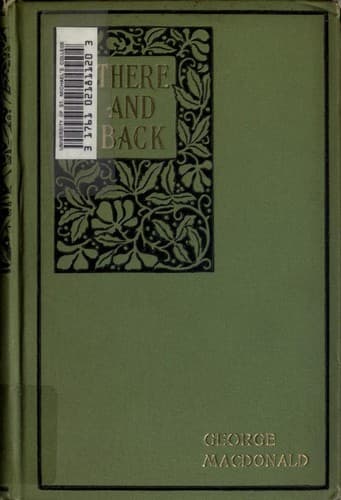
Christian fiction; Wingfold, Thomas (Fictitious character) -- Fiction
the life lived in it, with the hopes and necessities of the heart and
mind. If “the hope of the glory of God” must be fashioned in like sort,
then were the whole affair of creation and redemption both dull and
desperate. There was no glow, no enthusiasm in the man--neither
could there be, with the notions he held. His God suggested a police
magistrate--and not a just one.
Richard would gladly have left the place, and wandered up and down in
the drizzle until, the service over, his mother should appear; but for
her sake he sat out the misery.
“The man,” he said to himself, “does not give us one peg on which to
hang the love of God that he tells us we ought to feel! Love a God like
that! If he were as good as my mother, I would love him! But we have all
to look out to protect ourselves from him! Mr. Parson, there's no such
being as you jabber about! It puzzles me to think what my mother gets
from you.”
He had written his letter to Barbara, and when they came out he posted
it. A long, long time of waiting followed; but no waiting brought any
answer. Lady Ann had dropped a hint, and Mr. Wylder had picked it up, a
hint delicate, but forcible enough to make him do what he had never done
before--keep an outlook on the letters that came for his daughter.
When Richard's arrived, it did not look to him that of a gentleman.
The writing was good, but precise; it was sealed with red wax, but the
impression was sunk: a proper seal had not been used! Especially where
his own family was concerned, Mr. Wylder was not the most delicate of
men! he opened the letter, and in it found what he called a rigmarole of
poetry and theology! “Confound the fellow!” he said to himself. Lady Ann
did well to warn him! There should be no more of this! The scatter-brain
took after her mother! He would give it her hot!
But he neither gave it her hot, nor gave her the letter; he did not say
a word. He feared the little girl he pretended to protect, and knew that
if he entered the lists with her, she would be too much for him. But he
did not understand that the mean in him dared not confront the noble in
his child. So Richard's letter only had it hot; it went into the fire,
and Bab never read the petition of her poor friend.
The next morning Richard went to the shop, and fell to the first
job that came to his hand. He acquainted his father with Lestrange's
proposal in regard to the library: Mr. Tuke would have him accept it.
“You shall have all it brings,” he said.
“I don't want the money!” returned Richard.
“But I want the honour of the thing,” replied his uncle. “You answered
the young gentleman sharply: you had better let me write!”
Richard made no objection. He would gladly keep the door open to any
place where the shadow of Barbara might fall, and was willing therefore
to pocket the offence of his causeless dismissal. But no notice was
taken of Tuke's letter, and a gulf of negation seemed to yawn between
the houses.
Public-domain text, read in full here on John Shaqi.
Reviews
Reviews
No reviews yet
Be the first to share your thoughts on this work.
Elsewhere in the archive
Join the Discussion
Join the discussion
Sign in to leave a comment or review.
Sign InorCreate an account