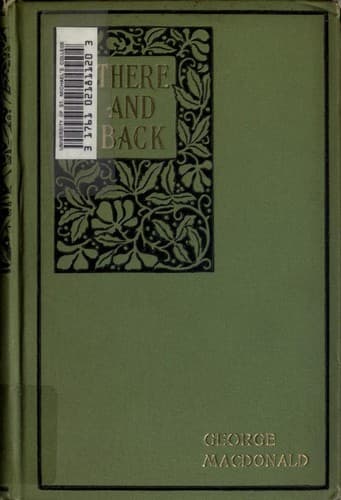
Christian fiction; Wingfold, Thomas (Fictitious character) -- Fiction
As soon as the next day's work was over, Richard sat down to write to
Barbara. But he had no sooner taken the pen in his fingers, than he
became doubtful: what was he to say? He could not open his heart about
any of the things that troubled him most! Putting aside the recurrent
dread of her own marriage, how could he mention his mother's wrong and
his own shame to a girl so young? She must be aware that such things
were, but how was he, a huge common fellow, to draw near her loveliness
with such a tale in his mouth! It would be a wrong to his own class, to
his own education! for would it not show the tradesman, or the artisan,
whichever they called him, as coarse, and unlit for the company of his
social superiors? It would go to prove that in no sense could one of
his nurture be regarded as a gentleman! And were there no such reason
against it, how could he, even to Barbara, speak of his mother's hidden
pain, of his mother's humiliation! It would be treachery! He would be as
a spy that had hid himself in a holy place! The thing she could not tell
him, how could he tell anyone! On the other hand, if he did not let her
know the sad fact, would he not be receiving and cherishing Barbara's
friendship on false pretences? He was not what he now seemed to her--and
to be other to Barbara than he seemed, was too terrible! Still and
again, he was bound to do her the justice of believing that she would
not regard him differently because of what he could not help, and would
justify his silence for his mother's sake. She would, in her great
righteousness, be the first to cry out upon the social rule that visited
the sins of the fathers on the mothers and children, and not on the
fathers themselves! If then disclosure would make no difference to
Barbara, he might, he concluded, let the thing rest--for the time at
least--assured of her sisterly sympathy. And with that he bethought
him that she had asked news of Alice, and it seemed to him strange.
For Alice had not told him that, unable to keep the money she sent from
falling into the hands of her mother and going in drink, unwilling to
expose her mother, and incapable of letting Barbara spend her money
so, she had contrived to have her remittances returned, as if they had
changed their dwelling, and their new address was unknown.
He wrote therefore what he thought would set her at ease about them; and
then, after thinking and thinking, yielded to the dread lest his heart
should make him say things he ought not, and ended with a little poem
that had come to him a night or two before.
This was the poem:
Public-domain text, read in full here on John Shaqi.
Reviews
Reviews
No reviews yet
Be the first to share your thoughts on this work.
Elsewhere in the archive
Join the Discussion
Join the discussion
Sign in to leave a comment or review.
Sign InorCreate an account