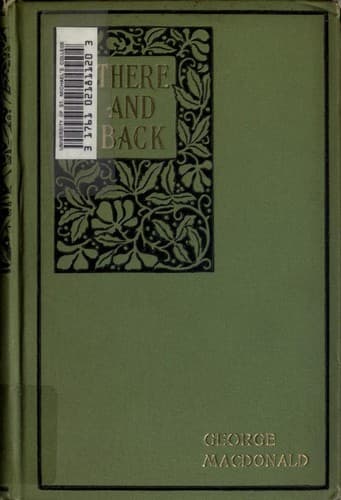
Christian fiction; Wingfold, Thomas (Fictitious character) -- Fiction
“If the rascal would make but apology enough to satisfy a Frenchman, I
would take him back!” he would say to himself over and over; “but he's
such a chip of the old block!--so damned independent!--Well, I don't
call it a great fault! If I had had a trade, I should have been just as
independent of my father! No, I want no apology from him! Let him just
say, 'Mayn't I come back, father?' and the gold ring and the wedding
garment shall be out for him directly!”
A month after Richard's expulsion, the baronet drove to the smithy, and
accused Simon of causing all the mischief. He must send the boy Manson
away, he said: he would settle an annuity on the beggar. That done,
Richard must make a suitable apology, and he would take him back. Simon
listened without a word. He wanted to see how far he would go.
“If you will not oblige me,” he ended, “you shall not have another
stroke of work from Mortgrange, and I will use my influence to drive you
from the county.”
Without waiting for an answer, he turned to walk from the shop. But he
did not walk. The moment he turned, Simon took him by the shoulders and
ran him right out of the smithy up to his carriage, into which, for the
footman had made haste to open the door, he would have tumbled him neck
and heels, but that, gout and all, sir Wilton managed to spring on the
step, and get in without falling. In a rage by no means unnatural, he
called to the coachman to send his lash about the ruffian's ears. Simon
burst into a guffaw, which so startled the horses that the footman had
to run to their heads. In his haste to do so, he failed to shut the
door properly; it opened and banged, swinging this way and that, as the
horses now reared, now backed, now pulled, and the baronet, cursing and
swearing, was tossed about in his carriage like a dried-up kernel in
a nut. Simon at length, with tears of merriment running down his red
cheeks, managed, in a succession of gymnastics, to close the door.
“Home, Peterkin?” he shouted, and turning away, strode back to his
forge, whence immediately sprang upon the air the merriest tune ever
played by anvil and hammer with a horse-shoe between them--the sparks
flying about the musician like a nimbus of embodied notes. It seemed to
soothe the horses, for they started immediately without further racket.
Before the next month was over, the baronet was again in the smithy--in
a better mood this time. He made no reference to his former ignominious
dismissal--wanted only to know if Simon had heard from his grandson. The
old man answered that he had: he was well, happy, and busy. Sir Wilton
gave a grunt.
“Why didn't he stay and help you?”
“I begged him to do so,” answered Simon, “for he is almost as good at
the anvil, and quite as good at the shoring as myself; but he said it
would annoy his father to have him so near, and he wouldn't do it.”
His boy's good will made the baronet fidget and swear to hide his
compunction. But his evil angel got the upper hand.
Public-domain text, read in full here on John Shaqi.
Reviews
Reviews
No reviews yet
Be the first to share your thoughts on this work.
Elsewhere in the archive
Join the Discussion
Join the discussion
Sign in to leave a comment or review.
Sign InorCreate an account