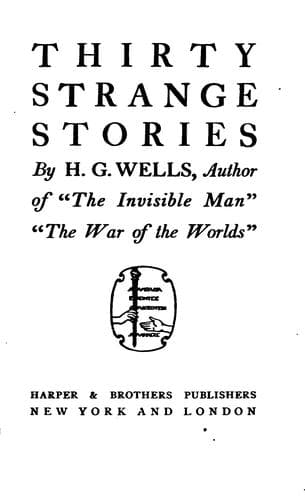
Thirty Strange StoriesWells, H. G. (Herbert George)
Science
Thirty Strange Stories
Wells, H. G. (Herbert George)
Fantasy fiction, English; Science fiction, English; Short stories, English
Presently, faint through the closed windows came the sound of the
Oratory clock striking the hour of eleven. The clicking of the microtome
ceased, and the demonstrator looked at his watch, rose, thrust his hands
into his pockets, and walked slowly down the laboratory towards the
lecture-theatre door. He stood listening for a moment, and then his eye
fell on the little volume by William Morris. He picked it up, glanced at
the title, smiled, opened it, looked at the name on the fly-leaf, ran
the leaves through with his hand, and put it down. Almost immediately
the even murmur of the lecturer ceased, there was a sudden burst of
pencils rattling on the desks in the lecture-theatre, a stirring, a
scraping of feet, and a number of voices speaking together. Then a firm
footfall approached the door, which began to open, and stood ajar, as
some indistinctly heard question arrested the new-comer.
The demonstrator turned, walked slowly back past the microtome and left
the laboratory by the preparation-room door. As he did so, first one,
and then several students carrying note-books, entered the laboratory
from the lecture-theatre, and distributed themselves among the little
tables, or stood in a group about the doorway. They were an
exceptionally heterogeneous assembly,—for while Oxford and Cambridge
still recoil from the blushing prospect of mixed classes, the College of
Science anticipated America in the matter years ago,—mixed socially,
too, for the prestige of the College is high, and its scholarships, free
of any age limit, dredge deeper even than do those of the Scotch
universities. The class numbered one and twenty, but some remained in
the theatre questioning the professor, copying the blackboard diagrams
before they were washed off, or examining the special specimens he had
produced to illustrate the day’s teaching. Of the nine who had come into
the laboratory, three were girls, one of whom, a little fair woman
wearing spectacles and dressed in greyish green, was peering out of the
window at the fog, while the other two, both wholesome-looking,
plain-faced school-girls, unrolled and put on the brown holland aprons
they wore while dissecting. Of the men, two went down the laboratory and
sat down in their places, one a pallid, dark-bearded man who had once
been a tailor, the other a pleasant-featured, ruddy young man of twenty,
dressed in a well-fitting brown suit, young Wedderburn, the son of
Wedderburn the eye-specialist. The others formed a little knot near the
theatre door. One of these, a dwarfed, spectacled figure with a hunch
back, sat on a bent wood stool, two others, one a short, dark youngster,
and the other a flaxen-haired, reddish-complexioned young man, stood
leaning side by side against the slate sink, while the fourth stood
facing them and maintained the larger share of the conversation.
Public-domain text, read in full here on John Shaqi.
Reviews
Reviews
No reviews yet
Be the first to share your thoughts on this work.
Elsewhere in the archive
Join the Discussion
Join the discussion
Sign in to leave a comment or review.
Sign InorCreate an account