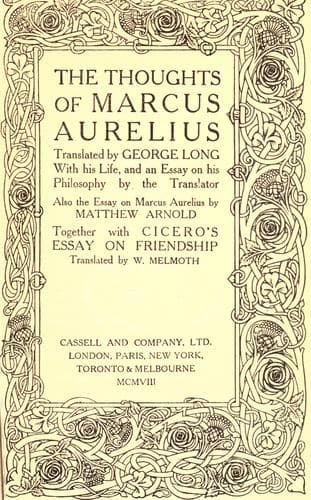
Thoughts of Marcus AureliusMarcus Aurelius, Emperor of Rome
PhilosophyPhilosophy
Thoughts of Marcus Aurelius
Marcus Aurelius, Emperor of Rome
Ethics; Life; Marcus Aurelius, Emperor of Rome, 121-180; Stoics
15. They know not how many things are signified by the words stealing,
sowing, buying, keeping quiet, seeing what ought to be done; for this
is not effected by the eyes, but by another kind of vision.
16. Body, soul, intelligence: to the body belong sensations, to the
soul appetites, to the intelligence principles. To receive the
impressions of forms by means of appearances belongs even to animals;
to be pulled by the strings of desire belongs both to wild beasts and
to men who have made themselves into women, and to a Phalaris and a
Nero: and to have the intelligence that guides to the things which
appear suitable belongs also to those who do not believe in the gods,
and who betray their country, and do their impure deeds when they have
shut the doors. If then everything else is common to all that I have
mentioned, there remains that which is peculiar to the good man, to be
pleased and content with what happens, and with the thread which is
spun for him; and not to defile the divinity which is planted in his
breast, nor disturb it by a crowd of images, but to preserve it
tranquil, following it obediently as a god, neither saying anything
contrary to the truth, nor doing anything contrary to justice. And if
all men refuse to believe that he lives a simple, modest, and contented
life, he is neither angry with any of them, nor does he deviate from
the way which leads to the end of life, to which a man ought to come
pure, tranquil, ready to depart, and without any compulsion perfectly
reconciled to his lot.
BOOK IV.
1. That which rules within, when it is according to nature, is so
affected with respect to the events which happen, that it always easily
adapts itself to that which is possible and is presented to it. For it
requires no definite material, but it moves towards its purpose, under
certain conditions, however; and it makes a material for itself out of
that which opposes it, as fire lays hold of what falls into it, by
which a small light would have been extinguished: but when the fire is
strong, it soon appropriates to itself the matter which is heaped on
it, and consumes it, and rises higher by means of this very material.
2. Let no act be done without a purpose, nor otherwise than according
to the perfect principles of art.
Public-domain text, read in full here on John Shaqi.
Reviews
Reviews
No reviews yet
Be the first to share your thoughts on this work.
Join the Discussion
Join the discussion
Sign in to leave a comment or review.
Sign InorCreate an account