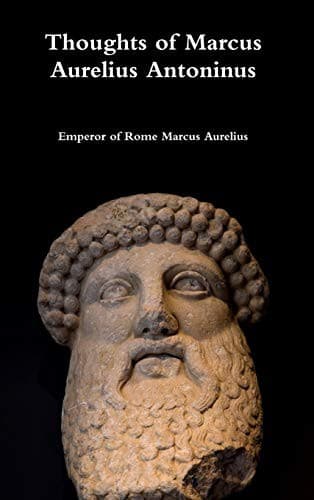
Thoughts of Marcus Aurelius AntoninusMarcus Aurelius, Emperor of Rome
PhilosophyPhilosophy
Thoughts of Marcus Aurelius Antoninus
Marcus Aurelius, Emperor of Rome
Ethics; Life; Marcus Aurelius, Emperor of Rome, 121-180; Stoics
49. Say nothing more to thyself than what the first appearances report.
Suppose that it has been reported to thee that a certain person speaks
ill of thee. This has been reported; but that thou hast been injured,
that has not been reported. I see that my child is sick. I do see; but
that he is in danger, I do not see. Thus then always abide by the first
appearances, and add nothing thyself from within, and then nothing
happens to thee. Or rather add something like a man who knows everything
that happens in the world.
50. A cucumber is bitter--Throw it away.--There are briers in the
road--Turn aside from them.--This is enough. Do not add, And why were
such things made in the world? For thou wilt be ridiculed by a man who
is acquainted with nature, as thou wouldst be ridiculed by a carpenter
and shoemaker if thou didst find fault because thou seest in their
workshop shavings and cuttings from the things which they make. And yet
they have places into which they can throw these shavings and cuttings,
and the universal nature has no external space; but the wondrous part of
her art is that though she has circumscribed herself, everything within
her which appears to decay and to grow old and to be useless she changes
into herself, and again makes other new things from these very same, so
that she requires neither substance from without nor wants a place into
which she may cast that which decays. She is content then with her own
space, and her own matter, and her own art.
51. Neither in thy actions be sluggish nor in thy conversation without
method, nor wandering in thy thoughts, nor let there be in thy soul
inward contention nor external effusion, nor in life be so busy as to
have no leisure.
Suppose that men kill thee, cut thee in pieces, curse thee. What then
can these things do to prevent thy mind from remaining pure, wise,
sober, just? For instance, if a man should stand by a limpid pure
spring, and curse it, the spring never ceases sending up potable water;
and if he should cast clay into it or filth, it will speedily disperse
them and wash them out, and will not be at all polluted. How then shalt
thou possess a perpetual fountain [and not a mere well]? By forming +
thyself hourly to freedom conjoined with contentment, simplicity, and
modesty.
52. He who does not know what the world is, does not know where he is.
And he who does not know for what purpose the world exists, does not
know who he is, nor what the world is. But he who has failed in any one
of these things could not even say for what purpose he exists himself.
What then dost thou think of him who [avoids or] seeks the praise of
those who applaud, of men who know not either where they are or who they
are?
53. Dost thou wish to be praised by a man who curses himself thrice
every hour? wouldst thou wish to please a man who does not please
himself? Does a man please himself who repents of nearly everything that
he does?
Public-domain text, read in full here on John Shaqi.
Reviews
Reviews
No reviews yet
Be the first to share your thoughts on this work.
Elsewhere in the archive
Join the Discussion
Join the discussion
Sign in to leave a comment or review.
Sign InorCreate an account