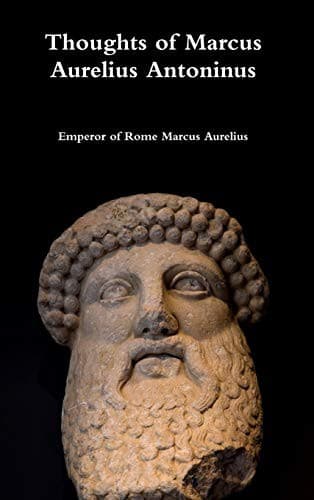
Thoughts of Marcus Aurelius AntoninusMarcus Aurelius, Emperor of Rome
PhilosophyPhilosophy
Thoughts of Marcus Aurelius Antoninus
Marcus Aurelius, Emperor of Rome
Ethics; Life; Marcus Aurelius, Emperor of Rome, 121-180; Stoics
9. All things which participate in anything which is common to them all,
move towards that which is of the same kind with themselves. Everything
which is earthy turns towards the earth, everything which is liquid
flows together, and everything which is of an aerial kind does the
same, so that they require something to keep them asunder, and the
application of force. Fire indeed moves upwards on account of the
elemental fire, but it is so ready to be kindled together with all the
fire which is here, that even every substance which is somewhat dry is
easily ignited, because there is less mingled with it of that which is a
hindrance to ignition. Accordingly, then, everything also which
participates in the common intelligent nature moves in like manner
towards that which is of the same kind with itself, or moves even more.
For so much as it is superior in comparison with all other things, in
the same degree also is it more ready to mingle with and to be fused
with that which is akin to it. Accordingly among animals devoid of
reason we find swarms of bees, and herds of cattle, and the nurture of
young birds, and in a manner, loves; for even in animals there are
souls, and that power which brings them together is seen to exert itself
in a superior degree, and in such a way as never has been observed in
plants nor in stones nor in trees. But in rational animals there are
political communities and friendships, and families and meetings of
people; and in wars, treaties, and armistices. But in the things which
are still superior, even though they are separated from one another,
unity in a manner exists, as in the stars. Thus the ascent to the higher
degree is able to produce a sympathy even in things which are
separated. See, then, what now takes place; for only intelligent animals
have now forgotten this mutual desire and inclination, and in them alone
the property of flowing together is not seen. But still, though men
strive to avoid [this union], they are caught and held by it, for their
nature is too strong for them; and thou wilt see what I say, if thou
only observest. Sooner, then, will one find anything earthy which comes
in contact with no earthy thing, than a man altogether separated from
other men.
10. Both man and God and the universe produce fruit; at the proper
seasons each produces it. But and if usage has especially fixed these
terms to the vine and like things, this is nothing. Reason produces
fruit both for all and for itself, and there are produced from it other
things of the same kind as reason itself.
11. If thou art able, correct by teaching those who do wrong; but if
thou canst not, remember that indulgence is given to thee for this
purpose. And the gods, too, are indulgent to such persons; and for some
purposes they even help them to get health, wealth, reputation; so kind
they are. And it is in thy power also; or say, who hinders thee?
Public-domain text, read in full here on John Shaqi.
Reviews
Reviews
No reviews yet
Be the first to share your thoughts on this work.
Elsewhere in the archive
Join the Discussion
Join the discussion
Sign in to leave a comment or review.
Sign InorCreate an account