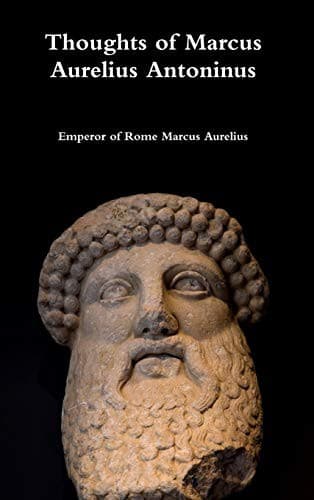
Thoughts of Marcus Aurelius AntoninusMarcus Aurelius, Emperor of Rome
PhilosophyPhilosophy
Thoughts of Marcus Aurelius Antoninus
Marcus Aurelius, Emperor of Rome
Ethics; Life; Marcus Aurelius, Emperor of Rome, 121-180; Stoics
42. When thou art offended with any man's shameless conduct, immediately
ask thyself, Is it possible, then, that shameless men should not be in
the world? It is not possible. Do not, then, require what is impossible.
For this man also is one of those shameless men who must of necessity be
in the world. Let the same considerations be present to thy mind in the
case of the knave, and the faithless man, and of every man who does
wrong in any way. For at the same time that thou dost remind thyself
that it is impossible that such kind of men should not exist, thou wilt
become more kindly disposed towards every one individually. It is useful
to perceive this, too, immediately when the occasion arises, what virtue
nature has given to man to oppose to every wrongful act. For she has
given to man, as an antidote against the stupid man, mildness, and
against another kind of man some other power. And in all cases it is
possible for thee to correct by teaching the man who is gone astray; for
every man who errs misses his object and is gone astray. Besides,
wherein hast thou been injured? For thou wilt find that no one among
those against whom thou art irritated has done anything by which thy
mind could be made worse; but that which is evil to thee and harmful has
its foundation only in the mind. And what harm is done or what is there
strange, if the man who has not been instructed does the acts of an
uninstructed man? Consider whether thou shouldst not rather blame
thyself, because thou didst not expect such a man to err in such a way.
For thou hadst means given thee by thy reason to suppose that it was
likely that he would commit this error, and yet thou hast forgotten and
art amazed that he has erred. But most of all when thou blamest a man as
faithless or ungrateful, turn to thyself. For the fault is manifestly
thy own, whether thou didst trust that a man who had such a disposition
would keep his promise, or when conferring thy kindness thou didst not
confer it absolutely, nor yet in such way as to have received from thy
very act all the profit. For what more dost thou want when thou hast
done a man a service? art thou not content that thou hast done something
conformable to thy nature, and dost thou seek to be paid for it? just as
if the eye demanded a recompense for seeing, or the feet for walking.
For as these members are formed for a particular purpose, and by working
according to their several constitutions obtain what is their own;[A] so
also as man is formed by nature to acts of benevolence, when he has done
anything benevolent or in any other way conducive to the common
interest, he has acted conformably to his constitution, and he gets what
is his own.
[A] [Greek: Apechei to idion]. This sense of [Greek: apechein]
occurs in xi. 1, and iv. 49; also in St. Matthew, vi. 2,
[Greek: apechousi ton misthon], and in Epictetus.
X.
Public-domain text, read in full here on John Shaqi.
Reviews
Reviews
No reviews yet
Be the first to share your thoughts on this work.
Elsewhere in the archive
Join the Discussion
Join the discussion
Sign in to leave a comment or review.
Sign InorCreate an account