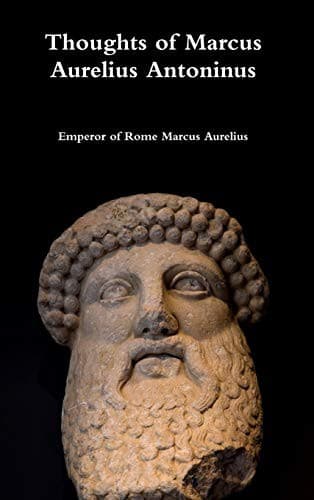
Thoughts of Marcus Aurelius AntoninusMarcus Aurelius, Emperor of Rome
PhilosophyPhilosophy
Thoughts of Marcus Aurelius Antoninus
Marcus Aurelius, Emperor of Rome
Ethics; Life; Marcus Aurelius, Emperor of Rome, 121-180; Stoics
Wilt thou, then, my soul, never be good and simple and one and naked,
more manifest than the body which surrounds thee? Wilt thou never enjoy
an affectionate and contented disposition? Wilt thou never be full and
without a want of any kind, longing for nothing more, nor desiring
anything, either animate or inanimate, for the enjoyment of pleasures?
nor yet desiring time wherein thou shalt have longer enjoyment, or
place, or pleasant climate, or society of men with whom thou mayst live
in harmony? but wilt thou be satisfied with thy present condition, and
pleased with all that is about thee, and wilt thou convince thyself that
thou hast everything, and that it comes from the gods, that everything
is well for thee, and will be well whatever shall please them, and
whatever they shall give for the conservation of the perfect living
being,[A] the good and just and beautiful, which generates and holds
together all things, and contains and embraces all things which are
dissolved for the production of other like things? Wilt thou never be
such that thou shalt so dwell in community with gods and men as neither
to find fault with them at all, nor to be condemned by them?
[A] That is, God (iv. 40), as he is defined by Zeno. But the
confusion between gods and God is strange.
2. Observe what thy nature requires, so far as thou art governed by
nature only: then do it and accept it, if thy nature, so far as thou art
a living being, shall not be made worse by it. And next thou must
observe what thy nature requires so far as thou art a living being. And
all this thou mayst allow thyself, if thy nature, so far as thou art a
rational animal, shall not be made worse by it. But the rational animal
is consequently also a political [social] animal. Use these rules, then,
and trouble thyself about nothing else.
3. Everything which happens either happens in such wise as thou art
formed by nature to bear it, or as thou art not formed by nature to bear
it. If, then, it happens to thee in such way as thou art formed by
nature to bear it, do not complain, but bear it as thou art formed by
nature to bear it. But if it happens in such wise as thou art not formed
by nature to bear it, do not complain, for it will perish after it has
consumed thee. Remember, however, that thou art formed by nature to bear
everything, with respect to which it depends on thy own opinion to make
it endurable and tolerable, by thinking that it is either thy interest
or thy duty to do this.
4. If a man is mistaken, instruct him kindly and show him his error. But
if thou art not able, blame thyself, or blame not even thyself.
5. Whatever may happen to thee, it was prepared for thee from all
eternity; and the implication of causes was from eternity spinning the
thread of thy being, and of that which is incident to it (iii. 11; iv.
26).
Public-domain text, read in full here on John Shaqi.
Reviews
Reviews
No reviews yet
Be the first to share your thoughts on this work.
Elsewhere in the archive
Join the Discussion
Join the discussion
Sign in to leave a comment or review.
Sign InorCreate an account