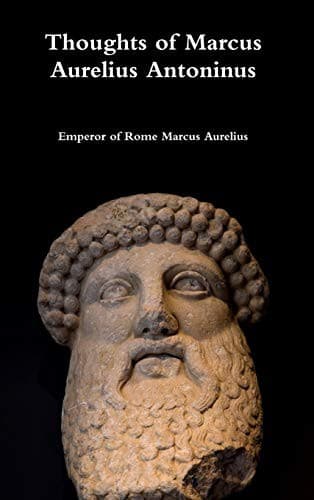
Thoughts of Marcus Aurelius AntoninusMarcus Aurelius, Emperor of Rome
PhilosophyPhilosophy
Thoughts of Marcus Aurelius Antoninus
Marcus Aurelius, Emperor of Rome
Ethics; Life; Marcus Aurelius, Emperor of Rome, 121-180; Stoics
7. How plain does it appear that there is not another condition of life
so well suited for philosophizing as this in which thou now happenest to
be.
8. A branch cut off from the adjacent branch must of necessity be cut
off from the whole tree also. So too a man when he is separated from
another man has fallen off from the whole social community. Now as to a
branch, another cuts it off; but a man by his own act separates himself
from his neighbor when he hates him and turns away from him, and he does
not know that he has at the same time cut himself off from the whole
social system. Yet he has this privilege certainly from Zeus, who framed
society, for it is in our power to grow again to that which is near to
us, and again to become a part which helps to make up the whole.
However, if it often happens, this kind of separation, it makes it
difficult for that which detaches itself to be brought to unity and to
be restored to its former condition. Finally, the branch, which from the
first grew together with the tree, and has continued to have one life
with it, is not like that which after being cut off is then ingrafted,
for this is something like what the gardeners mean when they say that it
grows with the rest of the tree, but+ that it has not the same mind with
it.
9. As those who try to stand in thy way when thou art proceeding
according to right reason will not be able to turn thee aside from thy
proper action, so neither let them drive thee from thy benevolent
feelings toward them, but be on thy guard equally in both matters, not
only in the matter of steady judgment and action, but also in the matter
of gentleness to those who try to hinder or otherwise trouble thee. For
this also is a weakness, to be vexed at them, as well as to be diverted
from thy course of action and to give way through fear; for both are
equally deserters from their post,--the man who does it through fear,
and the man who is alienated from him who is by nature a kinsman and a
friend.
10. There is no nature which is inferior to art, for the arts imitate
the natures of things. But if this is so, that nature which is the most
perfect and the most comprehensive of all natures, cannot fall short of
the skill of art Now all arts do the inferior things for the sake of
the superior; therefore the universal nature does so too. And, indeed,
hence is the origin of justice, and in justice the other virtues have
their foundation: for justice will not be observed, if we either care
for middle things [things indifferent], or are easily deceived and
careless and changeable (v. 16. 30; vii. 55).
11. If the things do not come to thee, the pursuits and avoidances of
which disturb thee, still in a manner thou goest to them. Let then thy
judgment about them be at rest, and they will remain quiet, and thou
wilt not be seen either pursuing or avoiding.
Public-domain text, read in full here on John Shaqi.
Reviews
Reviews
No reviews yet
Be the first to share your thoughts on this work.
Elsewhere in the archive
Join the Discussion
Join the discussion
Sign in to leave a comment or review.
Sign InorCreate an account