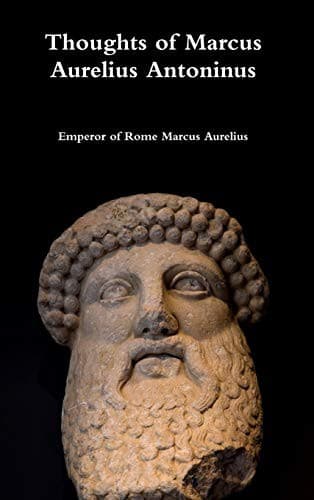
Thoughts of Marcus Aurelius AntoninusMarcus Aurelius, Emperor of Rome
PhilosophyPhilosophy
Thoughts of Marcus Aurelius Antoninus
Marcus Aurelius, Emperor of Rome
Ethics; Life; Marcus Aurelius, Emperor of Rome, 121-180; Stoics
2. Thou wilt set little value on pleasing song and dancing and the
pancratium, if thou wilt distribute the melody of the voice into its
several sounds, and ask thyself as to each, if thou art mastered by
this; for thou wilt be prevented by shame from confessing it: and in the
matter of dancing, if at each movement and attitude thou wilt do the
same; and the like also in the matter of the pancratium. In all things,
then, except virtue and the acts of virtue, remember to apply thyself to
their several parts, and by this division to come to value them little:
and apply this rule also to thy whole life.
3. What a soul that is which is ready, if at any moment it must be
separated from the body, and ready either to be extinguished or
dispersed or continue to exist; but so that this readiness comes from a
man's own judgment, not from mere obstinacy, as with the Christians,[A]
but considerately and with dignity and in a way to persuade another,
without tragic show.
[A] See the Life of Antoninus. This is the only passage in
which the emperor speaks of the Christians. Epictetus (iv. 7,
6) names them Galilaei.
4. Have I done something for the general interest? Well then, I have
had my reward. Let this always be present to thy mind, and never stop
[doing such good].
5. What is thy art? To be good. And how is this accomplished well except
by general principles, some about the nature of the universe, and others
about the proper constitution of man?
6. At first tragedies were brought on the stage as means of reminding
men of the things which happen to them, and that it is according to
nature for things to happen so, and that, if you are delighted with what
is shown on the stage, you should not be troubled with that which takes
place on the larger stage. For you see that these things must be
accomplished thus, and that even they bear them who cry out,[A] "O
Cithaeron." And, indeed, some things are said well by the dramatic
writers, of which kind is the following especially:--
"Me and my children if the gods neglect,
This has its reason too."[B]
And again,--
"We must not chafe and fret at that which happens."
And,--
"Life's harvest reap like the wheat's fruitful ear."
And other things of the same kind.
After tragedy the old comedy was introduced, which had a magisterial
freedom of speech, and by its very plainness of speaking was useful in
reminding men to beware of insolence; and for this purpose too Diogenes
used to take from these writers.
[A] Sophocles, Oedipus Rex.
[B] See vii. 41, 38, 40.
But as to the middle comedy, which came next, observe what it was, and
again, for what object the new comedy was introduced, which gradually
sank down into a mere mimic artifice. That some good things are said
even by these writers, everybody knows: but the whole plan of such
poetry and dramaturgy, to what end does it look?
Public-domain text, read in full here on John Shaqi.
Reviews
Reviews
No reviews yet
Be the first to share your thoughts on this work.
Elsewhere in the archive
Join the Discussion
Join the discussion
Sign in to leave a comment or review.
Sign InorCreate an account