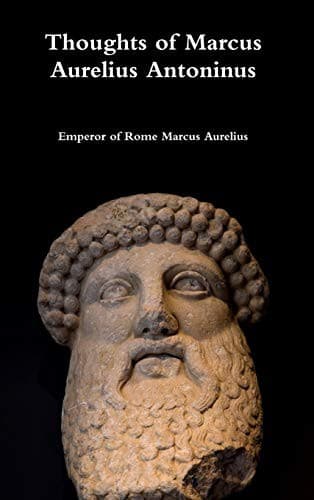
Thoughts of Marcus Aurelius AntoninusMarcus Aurelius, Emperor of Rome
PhilosophyPhilosophy
Thoughts of Marcus Aurelius Antoninus
Marcus Aurelius, Emperor of Rome
Ethics; Life; Marcus Aurelius, Emperor of Rome, 121-180; Stoics
Antoninus set out for the East on hearing of Cassius' revolt. Though he
appears to have returned to Rome in A.D. 174, he went back to prosecute
the war against the Germans, and it is probable that he marched direct
to the East from the German war. His wife Faustina, who accompanied him
into Asia, died suddenly at the foot of the Taurus, to the great grief
of her husband. Capitolinus, who has written the life of Antoninus, and
also Dion Cassius, accuses the empress of scandalous infidelity to her
husband, and of abominable lewdness. But Capitolinus says that Antoninus
either knew it not or pretended not to know it. Nothing is so common as
such malicious reports in all ages, and the history of imperial Rome is
full of them. Antoninus loved his wife, and he says that she was
"obedient, affectionate, and simple." The same scandal had been spread
about Faustina's mother, the wife of Antoninus Pius, and yet he too was
perfectly satisfied with his wife. Antoninus Pius says after her death,
in a letter to Fronto, that he would rather have lived in exile with his
wife than in his palace at Rome without her. There are not many men who
would give their wives a better character than these two emperors.
Capitolinus wrote in the time of Diocletian. He may have intended to
tell the truth, but he is a poor, feeble biographer. Dion Cassius, the
most malignant of historians, always reports, and perhaps he believed,
any scandal against anybody.
Antoninus continued his journey to Syria and Egypt, and on his return to
Italy through Athens he was initiated into the Eleusinian mysteries. It
was the practice of the emperor to conform to the established rites of
the age, and to perform religious ceremonies with due solemnity. We
cannot conclude from this that he was a superstitious man, though we
might perhaps do so if his book did not show that he was not. But that
is only one among many instances that a ruler's public acts do not
always prove his real opinions. A prudent governor will not roughly
oppose even the superstitions of his people; and though he may wish they
were wiser, he will know that he cannot make them so by offending their
prejudices.
Public-domain text, read in full here on John Shaqi.
Reviews
Reviews
No reviews yet
Be the first to share your thoughts on this work.
Join the Discussion
Join the discussion
Sign in to leave a comment or review.
Sign InorCreate an account