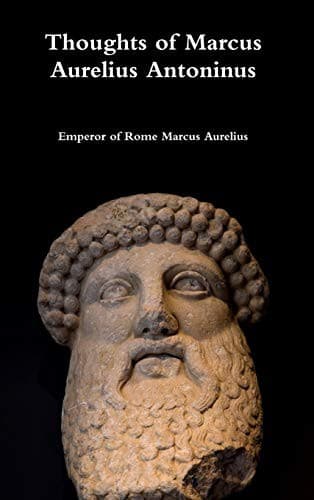
Thoughts of Marcus Aurelius Antoninus — John Shaqi
Thoughts of Marcus Aurelius AntoninusMarcus Aurelius, Emperor of Rome
PhilosophyPhilosophy
Thoughts of Marcus Aurelius Antoninus
Marcus Aurelius, Emperor of Rome
Ethics; Life; Marcus Aurelius, Emperor of Rome, 121-180; Stoics
Some of the Stoics indeed expressed themselves in very arrogant, absurd
terms, about the wise man's self-sufficiency; they elevated him to the
rank of a deity.[A] But these were only talkers and lecturers, such as
those in all ages who utter fine words, know little of human affairs,
and care only for notoriety. Epictetus and Antoninus both by precept and
example labored to improve themselves and others; and if we discover
imperfections in their teaching, we must still honor these great men who
attempted to show that there is in man's nature and in the constitution
of things sufficient reason for living a virtuous life. It is difficult
enough to live as we ought to live, difficult even for any man to live
in such a way as to satisfy himself, if he exercises only in a moderate
degree the power of reflecting upon and reviewing his own conduct; and
if all men cannot be brought to the same opinions in morals and
religion, it is at least worth while to give them good reasons for as
much as they can be persuaded to accept.
[A] J. Smith in his Select Discourses on "the Excellency and
Nobleness of True Religion" (c. vi.) has remarked on this
Stoical arrogance. He finds it in Seneca and others. In Seneca
certainly, and perhaps something of it in Epictetus; but it is
not in Antoninus.
THE THOUGHTS
OF
MARCUS AURELIUS ANTONIUS.
I.
From my grandfather Verus[A] [I learned] good morals and the government
of my temper.
2. From the reputation and remembrance of my father,[B] modesty and a
manly character.
3. From my mother,[C] piety and beneficence, and abstinence, not only
from evil deeds, but even from evil thoughts; and further, simplicity in
my way of living, far removed from the habits of the rich.
4. From my great-grandfather,[D] not to have frequented public schools,
and to have had good teachers at home, and to know that on such things a
man should spend liberally.
[A] Annius Verus was his grandfather's name. There is no verb
in this section connected with the word "from," nor in the
following sections of this book; and it is not quite certain
what verb should be supplied. What I have added may express the
meaning here, though there are sections which it will not fit.
If he does not mean to say that he learned all these good
things from the several persons whom he mentions, he means that
he observed certain good qualities in them, or received certain
benefits from them, and it is implied that he was the better
for it, or at least might have been: for it would be a mistake
to understand Marcus as saying that he possessed all the
virtues which he observed in his kinsmen and teachers.
[B] His father's name was Annius Verus.
[C] His mother was Domitia Calvilla, named also Lucilla.
[D] Perhaps his mother's grandfather, Catilius Severus.
Public-domain text, read in full here on John Shaqi.
Reviews
Reviews
No reviews yet
Be the first to share your thoughts on this work.
Join the Discussion
Join the discussion
Sign in to leave a comment or review.
Sign InorCreate an account