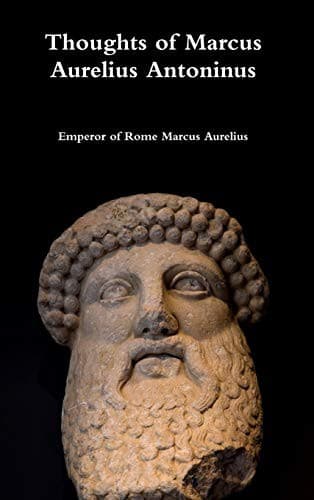
Thoughts of Marcus Aurelius AntoninusMarcus Aurelius, Emperor of Rome
PhilosophyPhilosophy
Thoughts of Marcus Aurelius Antoninus
Marcus Aurelius, Emperor of Rome
Ethics; Life; Marcus Aurelius, Emperor of Rome, 121-180; Stoics
31. Love the art, poor as it may be, which thou hast learned, and be
content with it; and pass through the rest of life like one who has
intrusted to the gods with his whole soul all that he has, making
thyself neither the tyrant nor the slave of any man.
32. Consider, for example, the times of Vespasian. Thou wilt see all
these things, people marrying, bringing up children, sick, dying,
warring, feasting, trafficking, cultivating the ground, flattering,
obstinately arrogant, suspecting, plotting, wishing for some to die,
grumbling about the present, loving, heaping up treasure, desiring
consulship, kingly power. Well, then, that life of these people no
longer exists at all. Again, remove to the times of Trajan. Again, all
is the same. Their life too is gone. In like manner view also the other
epochs of time and of whole nations, and see how many after great
efforts soon fell and were resolved into the elements. But chiefly thou
shouldst think of those whom thou hast thyself known distracting
themselves about idle things, neglecting to do what was in accordance
with their proper constitution, and to hold firmly to this and to be
content with it. And herein it is necessary to remember that the
attention given to everything has its proper value and proportion. For
thus thou wilt not be dissatisfied, if thou appliest thyself to smaller
matters no further than is fit.
33. The words which were formerly familiar are now antiquated: so also
the names of those who were famed of old, are now in a manner
antiquated, Camillus, Caeso, Volesus, Leonnatus, and a little after also
Scipio and Cato, then Augustus, then also Hadrianus and Antoninus. For
all things soon pass away and become a mere tale, and complete oblivion
soon buries them. And I say this of those who have shone in a wondrous
way. For the rest, as soon as they have breathed out their breath they
are gone, and no man speaks of them. And, to conclude the matter, what
is even an eternal remembrance? A mere nothing. What then is that about
which we ought to employ our serious pains? This one thing, thoughts
just, and acts social, and words which never lie, and a disposition
which gladly accepts all that happens, as necessary, as usual, as
flowing from a principle and source of the same kind.
34. Willingly give thyself up to Clotho [one of the fates], allowing her
to spin thy thread + into whatever things she pleases.
35. Everything is only for a day, both that which remembers and that
which is remembered.
36. Observe constantly that all things take place by change, and
accustom thyself to consider that the nature of the universe loves
nothing so much as to change the things which are and to make new things
like them. For everything that exists is in a manner the seed of that
which will be. But thou art thinking only of seeds which are cast into
the earth or into a womb: but this is a very vulgar notion.
Public-domain text, read in full here on John Shaqi.
Reviews
Reviews
No reviews yet
Be the first to share your thoughts on this work.
Elsewhere in the archive
Join the Discussion
Join the discussion
Sign in to leave a comment or review.
Sign InorCreate an account