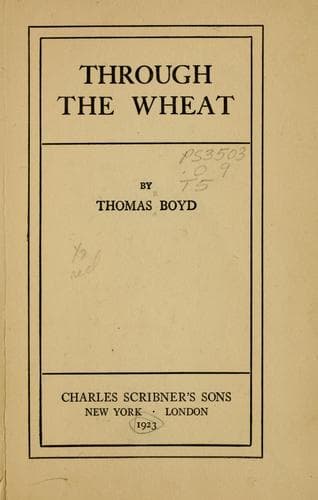
United States. Marine Corps -- Fiction; War stories; World War, 1914-1918 -- Fiction
The ground over which they were advancing looked stunted, blighted by
the incessant bursting of shells, the yellow layers of gas that, now and
again, had covered it. The grass was short and wiry, with bare spots of
earth showing. A desultory firing was being kept up by the artillery;
every now and then machine-guns would cut loose, spattering their lead
through the air. But the front was comparatively quiet. In an hour at
most the advancing line would have to halt. The sun already had made
its retiring bow in a final burst of glory, and now dusk curtained the
movements of the men.
Orderlies hurried wearily through the rough field, carrying messages
which would affect the activities of the troops in the morning.
Officers, indistinguishable from enlisted men, moved along, their air
of command forgotten in the effort to keep spirit and flesh together.
Their lineaments expressed a dumb horror, through which appeared an
appreciation of the grim, comic imbecility of the whole affair. When
spoken to, the men grinned awkwardly, trying to mask the horror of war
with a joke.
Some of the more energetic among them attacked the hard ground with their
shovels; the older and wiser men sought out shell holes large enough to
protect their bodies in case of a counter-attack.
The front was still, save for a nervous tremor running through the
opposing line and manifesting itself in the jerky firing of flare pistols.
Through the dull purple dusk three airplanes circled overhead, snowy
angry geese. From their present altitude it was not discernible which
were engaged in the assault, which the attacked. The motors, which
distinguished to the experienced ear whether the airplane was German
or Allied, were not to be heard. Red streaks traced a brilliant course
through the sky, forming a network of crimson between the fluttering
planes. The airplanes drew near each other, then darted away. They
revolved in circles, each trying to rise higher, directly over the other,
and pour from that point of vantage volleys of lead.
Detached, the men lying on the ground watched the spectacle, enjoying it
as they would have enjoyed a Fourth of July celebration.
Without warning, the airplane that circled beneath the other two rose
straight in the air. Above, it volleyed streams of bullets into the backs
of the others. The pilot of one of the planes beneath seemed to lose
control. Wing over wing, it fell like a piece of paper in a tempered
wind. The two remaining planes raced each other out of sight.
XIV
Public-domain text, read in full here on John Shaqi.
Reviews
Reviews
No reviews yet
Be the first to share your thoughts on this work.
Elsewhere in the archive
Join the Discussion
Join the discussion
Sign in to leave a comment or review.
Sign InorCreate an account