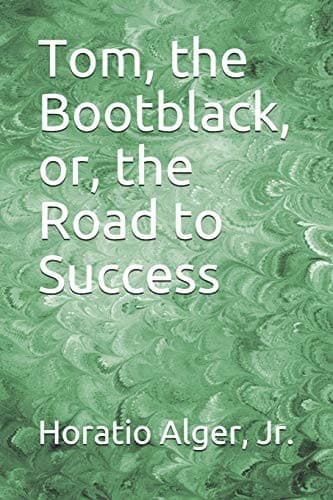
Tom, The Bootblack; or, The Road to SuccessAlger, Horatio, Jr.
General
Tom, The Bootblack; or, The Road to Success
Alger, Horatio, Jr.
Adventure and adventurers -- Juvenile fiction; Boys -- Juvenile fiction; Conduct of life -- Juvenile fiction
"It is under the floor of the room. You lift up a board just before you
get to the pantry, and you will see a tin box underneath. You will find
something else in it, Tom. It is a paper in which I wrote down all I
know about you. You said you would forgive me for wronging you."
"Yes, Jacob."
"Perhaps you can get back your rights; but I am afraid not."
"My rights!" repeated Tom, bewildered.
"Yes; I can't tell you about it; I am too weak; the paper will tell
you."
The old man began to show signs of exhaustion. The excitement of
learning his hopeless condition, and the conversation which he had
already held with Tom, had overtasked his feeble strength, and he
showed it by his appearance.
"I am afraid I have staid too long, Jacob," said Tom, considerately. "I
will go, now, but I will come back to-morrow morning."
"You won't look for the box till I am gone, Tom?" said the old man,
anxiously. "I--the doctors might be wrong; and, if I get well, I would
want it back again."
"No, Jacob, I will not look for it while you are alive."
"Promise me," said Jacob, suspicious to the last, where money was
concerned.
"I promise, Jacob. Don't be troubled. I would rather have you live than
take all the money."
"Good boy!" said Jacob, faintly, as his head sank back on the pillow.
Tom left the hospital ward with one last glance of compassion at the
miserable old man, who clung to life, which had so little that is
ordinarily counted agreeable, with despairing hope. It was the last
time he was to see Jacob alive. The next day, when he called to inquire
after the old man, he was told that he was dead. He sank steadily after
his last interview with our hero, and, having parted with the key to
his treasure, it seemed as if there was nothing left to live for.
CHAPTER VI.
THE REVELATION.
Tom had already made up his mind upon one point. He would accept the
bequest of his old companion, since, in so doing, he was robbing no one
better entitled to it. So far as he knew, the old man had no relatives
or friends, except himself. But he was determined that, since Jacob had
money, he should not be buried at the public expense. He would take so
much of the hundred dollars as might be necessary, and place it in the
hands of the doctor at Bellevue Hospital to defray the expenses of
Jacob's funeral. He would say nothing about it, however, till he had
actually found the money. It might be a hallucination of Jacob's, and
have no real existence.
"When will he be buried?" he inquired at the hospital.
"Day after to-morrow."
"How much will it cost?"
"Do not trouble yourself about that," said the physician, who judged
that Tom was poor. "That will be done at the expense of the city."
"But," said Tom, conscientiously, "he left a little money. At least he
told me so. If I find it, I will pay out of it whatever it costs."
"It is not necessary."
Public-domain text, read in full here on John Shaqi.
Reviews
Reviews
No reviews yet
Be the first to share your thoughts on this work.
Join the Discussion
Join the discussion
Sign in to leave a comment or review.
Sign InorCreate an account