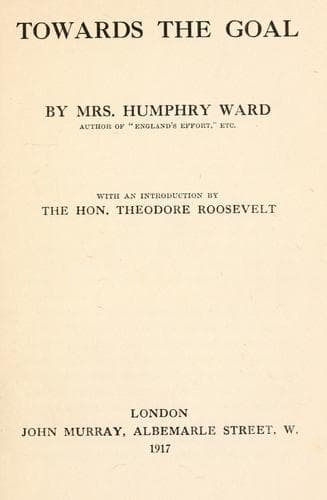
World War, 1914-1918 -- Campaigns -- Western Front; World War, 1914-1918 -- Personal narratives
The year 1915 saw great and continuous advance. During that year, an
_average number of over a million troops_ were being trained in the
United Kingdom, apart from the armies abroad. The First, Second, and
Third Armies naturally came off much better than the Fourth and Fifth,
who were yet being recruited all the time. What equipment, clothes and
arms there were the first three armies got; the rest had to wait. But
all the same, the units of these later armies were doing the best they
could for themselves all the time; nobody stood still. And
gradually--surely--order was evolved out of the original chaos. The Army
Orders of the past had dropped out of sight with the beginning of the
war. Everything had to be planned anew. The one governing factor was the
"necessity of getting men to the front at the earliest possible moment."
Six months' courses were laid down for all arms. It was very rare,
however, that any course could be strictly carried out, and after the
first three armies, the training of the rest seemed, for a time, to be
all beginnings!--with the final stage farther and farther away. And
always the same difficulty of guns, rifles, huts, and the rest.
But, like its own tanks, the War Office went steadily on, negotiating
one obstacle after another. Special courses for special subjects began
to be set up. Soon artillery officers had no longer to join their
batteries _at once_ on appointment; R.E. officers could be given a seven
weeks' training at Chatham; little enough, "for a man supposed to know
the use and repairs of telephones and telegraphs, or the way to build or
destroy a bridge, or how to meet the countless other needs with which a
sapper is called upon to deal!" Increasing attention was paid to staff
training and staff courses. And insufficient as it all was, for months,
the general results of this haphazard training, when the men actually
got into the field--all short-comings and disappointments admitted--were
nothing short of wonderful. Had the Germans forgotten that we are and
always have been a fighting people? That fact, at any rate, was brought
home to them by the unbroken spirit of the troops who held the line in
France and Flanders in 1915 against all attempts to break through; and
at Neuve Chapelle, or Loos, or a hundred other minor engagements, only
wanted numbers and ammunition--above all ammunition!--to win them the
full victory they had rightly earned.
Of this whole earlier stage, the _junior subaltern_ was the leading
figure. It was he--let me insist upon it anew--whose spirit made the new
armies. If the tender figure of the "_Lady of the Lamp_" has become for
many of us the chief symbol of the Crimean struggle, when Britain comes
to embody in sculpture or in painting that which has touched her most
deeply in this war, she will choose--surely--the figure of a boy of
nineteen, laughing, eager, undaunted, as quick to die as to live,
carrying in his young hands the "Luck" of England.
Public-domain text, read in full here on John Shaqi.
Reviews
Reviews
No reviews yet
Be the first to share your thoughts on this work.
Join the Discussion
Join the discussion
Sign in to leave a comment or review.
Sign InorCreate an account