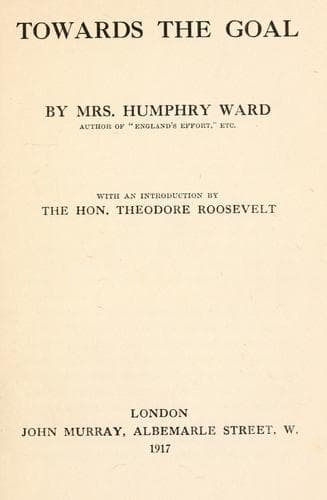
World War, 1914-1918 -- Campaigns -- Western Front; World War, 1914-1918 -- Personal narratives
Of the many surprises of the school I may not now speak. Above all, it
is a school of _observation_. Nothing escapes the eye or the ear. Every
point, for instance, connected with our two unfamiliar figures will have
been elaborately noted by those men on the edge of the hill; the officer
in charge will presently get a careful report on us.
"We teach our men the old great game of war--wit against wit--courage
against courage--life against life. We try many men here, and reject a
good few. But the men who have gone through our training here are
valuable, both for attack and defence--above all, let me repeat it, they
are valuable for _protection_."
And what is meant by this, I have since learnt in greater detail. Before
these schools were started, _every day_ saw a heavy toll--especially of
officers' lives--taken by German snipers. Compare with this one of the
latest records: that out of fifteen battalions there were only nine men
killed by snipers _in three months._
We leave the hill, half sliding down the frozen watercourse that leads
to it, and are in the motor again, bound for an Army Headquarters.
No. 4
_April 14th_, 1917.
DEAR MR. ROOSEVELT,--As the news comes flashing in, these April days,
and all the world holds its breath to hear the latest messages from
Arras and the Vimy ridge, it is natural that in the memory of a woman
who, six weeks ago, was a spectator--before the curtain rose--of the
actual scene of such events, every incident and figure of that past
experience, as she looks back upon it, should gain a peculiar and
shining intensity.
The battle of the Vimy Ridge [_April 8th_] is clearly going to be the
second (the first was the German retreat on the Somme) of those
"decisive events" determining this year the upshot of the war, to which
the Commander-in-Chief, with so strong and just a confidence, directed
the eyes of this country some three months ago. When I was in the
neighbourhood of the great battlefield--one may say it now!--the whole
countryside was one vast preparation. The signs of the coming attack
were everywhere--troops, guns, ammunition, food dumps, hospitals, air
stations--every actor and every property in the vast and tragic play
were on the spot, ready for the moment and the word.
Yet, except in the Headquarters and Staff Councils of the Army nobody
knew when the moment and the word would come, and nobody spoke of them.
The most careful and exact organisation for the great movement was going
on. No visitor would hear anything of it. Only the nameless stir in the
air, the faces of officers at Headquarters, the general alacrity, the
endless _work_ everywhere, prophesied the great things ahead. Perpetual,
highly organised, scientific drudgery is three parts of war, it seems,
as men now wage it. The Army, as I saw it, was at work--desperately at
work!--but "dreaming on things to come."
Public-domain text, read in full here on John Shaqi.
Reviews
Reviews
No reviews yet
Be the first to share your thoughts on this work.
Join the Discussion
Join the discussion
Sign in to leave a comment or review.
Sign InorCreate an account