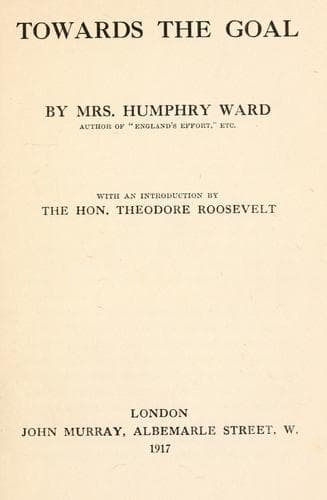
World War, 1914-1918 -- Campaigns -- Western Front; World War, 1914-1918 -- Personal narratives
"Here is February once more--one month nearer to peace. Otherwise all is
the same. Turnips! Turnips! Very few potatoes, only a little bread, and
no thought of butter or meat; on the other hand, any quantity of hunger.
I understand your case is not much better on the Somme."
Or this from a man of the Ersatz Battalion, 19th F.A.R., Dresden:
"Since January 16th I have been called up and put into the Foot
Artillery at Dresden. On the 16th we were first taken to the
Quartermaster's Stores, where 2,000 of us had to stand waiting in the
rain from 2.30 to 6.30.... On the 23rd I was transferred to the tennis
ground. We are more than 100 men in one room. Nearly all of us have
frozen limbs at present. The food, too, is bad; sometimes it cannot
possibly be eaten. Our training also is very quick, for we are to go
_into the field in six weeks_."
Or these from Itzehoe and Hanover:
"Could you get me some silk? It costs 8s. a metre here.... To-day, the
24th, all the shops were stormed for bread, and 1,000 loaves were stolen
from the bakery. There were several other thousand in stock. In some
shops the windows were smashed. In the grocers' shops the butter barrels
were rolled into the street. There were soldiers in civilian dress. The
Mayor wanted to hang them. There are no potatoes this week."
"To-day, the 27th, the bakers' shops in the ---- Road were stormed....
This afternoon the butchers' shops are to be stormed."
"If only peace would come soon! We have been standing to for an alarm
these last days, as the people here are storming all the bakers' shops.
It is a semi-revolution. It cannot last much longer."
To such a pass have the Kaiser and the Junker party brought their
countrymen! Here, no doubt, are some of the recipients of such letters
among the peaceful working groups in shabby green-grey, scattered along
the roads of France. As we pass, the German N.C.O. often looks up to
salute the officer who is with us, and the general aspect of the men--at
any rate of the younger men--is cheerfully phlegmatic. At least they are
safe from the British guns, and at least they have enough to eat. As to
this, let me quote, by way of contrast, a few passages from letters
written by prisoners in a British camp to their people at home. One
might feel a quick pleasure in the creature-comfort they express but for
the burning memory of our own prisoners, and the way in which thousands
of them have been cruelly ill-treated, tormented even, in Germany--worst
of all, perhaps, by German women.
The extracts are taken from letters written mostly in December and
January last:
(_a_) " ... Dear wife, don't fret about me, because the English treat us
very well. Only our own officers (N.C.O.'s) treat us even worse than
they do at home in barracks; but that we're accustomed to...."
Public-domain text, read in full here on John Shaqi.
Reviews
Reviews
No reviews yet
Be the first to share your thoughts on this work.
Join the Discussion
Join the discussion
Sign in to leave a comment or review.
Sign InorCreate an account