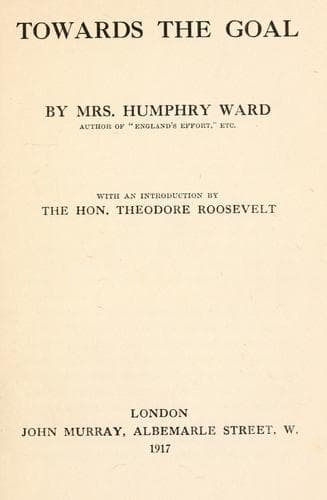
World War, 1914-1918 -- Campaigns -- Western Front; World War, 1914-1918 -- Personal narratives
As for the elaboration of everything else in this frightful art of war,
the ever-multiplying staff courses, the bombing and bayonet schools, the
special musketry and gas schools, the daily and weekly development of
aviation, the technical industry and skill, both among the gunners
abroad and the factory workers at home, which has now made our artillery
the terror of the German army: a woman can only realise it with a
shudder, and find comfort in two beliefs. First, that the whole horrible
process of war has _not_ brutalised the British soldier--you remember
the Army Commander whom I quoted in an earlier letter!--that he still
remains human and warm-hearted through it all, protected morally by the
ideal he willingly serves. Secondly, in the conviction that this
relentless struggle is the only means that remains to us of so chaining
up the wild beast of war, as the Germans have let it loose upon the
world, that our children and grandchildren at least shall live in peace,
and have time given them to work out a more reasonable scheme of things.
But, at any rate; we have gone a long way from the time when Matthew
Arnold, talking with "the manager of the Claycross works in Derbyshire"
during the Crimean War, "when our want of soldiers was much felt and
some people were talking of conscription," was told by his companion
that "sooner than submit to conscription the population of that district
would flee to the mines, and lead a sort of Robin Hood life
underground." An illuminating passage, in more ways than one, by the
way, as contrasted with the present state of things!--since it both
shows the stubbornness of the British temper in defence of "doing as it
likes," when no spark of an ideal motive fires it; and also brings out
its equal stubbornness to-day in support of a cause which it feels to be
supreme over the individual interest and will.
But the stubbornness, the discipline, the sacrifice of the armies in the
field are not all we want. The stubbornness of the nation _at home_, of
the men and the women, is no less necessary to the great end. In these
early days of March every week's news was bringing home to England the
growing peril of the submarine attack. Would the married women, the
elder women of the nation, rise to the demand for personal thought and
saving, for _training_--in the matter of food--with the same eager
goodwill as thousands of the younger women had shown in meeting the
armies' demand for munitions? For the women heads of households have it
largely in their hands.
The answer at the beginning of March was matter for anxiety. It is still
matter for anxiety now--at the beginning of May.
Public-domain text, read in full here on John Shaqi.
Reviews
Reviews
No reviews yet
Be the first to share your thoughts on this work.
Join the Discussion
Join the discussion
Sign in to leave a comment or review.
Sign InorCreate an account