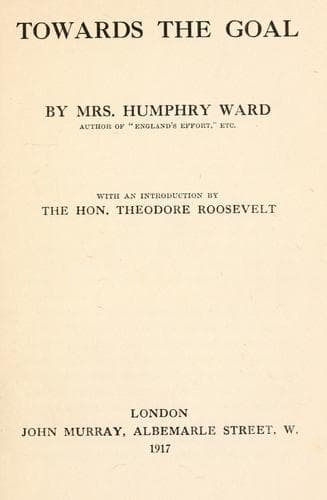
World War, 1914-1918 -- Campaigns -- Western Front; World War, 1914-1918 -- Personal narratives
The Bavarian soldiers in Gerbéviller were not only murderers--they were
incendiaries, even more deliberate and thorough-going than the soldiers
of Von Kluck's army at Senlis. With the exception of a few houses beyond
the hospital, spared at the entreaty of Soeur Julie, and on her promise
to nurse the German wounded, the whole town was deliberately burnt out,
house by house, the bare walls left standing, the rest destroyed. And
as, _after the fire_, the place was twice taken and retaken under
bombardment, its present condition may be imagined. It was during the
burning that some of the worst murders and outrages took place. For
there is a maddening force in triumphant cruelty, which is deadlier than
that of wine; under it men become demons, and all that is
human perishes.
The excuse, of course, was here as at Senlis--"les civils ont tiré!"
There is not the slightest evidence in support of the charge. As at
Senlis, there was a French rear-guard of 57 Chasseurs--left behind to
delay the German advance as long as possible. They were told to hold
their ground for five hours; they held it for eleven, fighting with
reckless bravery, and firing from a street below the hospital. The
Germans, taken by surprise, lost a good many men before, at small loss
to themselves, the Chasseurs retreated. In their rage at the unexpected
check, and feeling, no doubt, already that the whole campaign was going
against them, the Germans avenged themselves on the town and its
helpless inhabitants.
Our half-hour in Soeur Julie's parlour was a wonderful experience!
Imagine a portly woman of sixty, with a shrewd humorous face, talking
with French vivacity, and with many homely turns of phrase drawn
straight from that life of the soil and the peasants amid which she
worked; a woman named in one of General Castelnau's Orders of the Day
and entitled to wear the Legion of Honour; a woman, too, who has seen
horror face to face as few women, even in war, have seen it, yet still
simple, racy, full of irony, and full of heart, talking as a mother
might talk of her "grands blessés"! but always with humorous asides, and
an utter absence of pose or pretence; flashing now into scorn and now
into tenderness, as she described the conduct of the German officers who
searched her hospital for arms, or the helplessness of the wounded men
whom she protected. I will try and put down some of her talk. It threw
much light for me on the psychology of two nations.
Public-domain text, read in full here on John Shaqi.
Reviews
Reviews
No reviews yet
Be the first to share your thoughts on this work.
Elsewhere in the archive
Join the Discussion
Join the discussion
Sign in to leave a comment or review.
Sign InorCreate an account