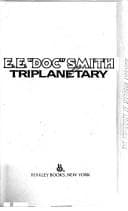
Human-alien encounters -- Fiction; Science fiction; Space warfare -- Fiction
Actually, there was very little to see. The road ended abruptly. What
had been a road, what had been wheatfields and farms, what had been
woods, were practically indistinguishable, one from the other; were
fantastically and impossibly the same. The entire area had been churned.
Worse--it was as though the ground and its every surface object had been
run through a gargantuan mill and spewed abroad. Splinters of wood,
riven chunks of metal, a few scraps of bloody flesh. Kinnison screamed,
then, and ran; ran back and around that blasted acreage. And as he ran,
his mind built up pictures; pictures which became only the more vivid
because of his frantic efforts to wipe them out.
That road, the night before, had been one of the world's most heavily
traveled highways. Motorcycles, trucks, bicycles. Ambulances. Kitchens.
Staff-cars and other automobiles. Guns; from seventy-fives up to the big
boys, whose tremendous weight drove their wide caterpillar treads inches
deep into solid ground. Horses. Mules. And people--_especially_
people--like himself. Solid columns of men, marching as fast as they
could step--there weren't trucks enough to haul them all. That road had
been crowded--jammed. Like State and Madison at noon, only more so.
Over-jammed with all the personnel, all the instrumentation and
incidentalia, all the weaponry, of war.
And upon that teeming, seething highway there had descended a rain of
steel-encased high explosive. Possibly some gas, but probably not. The
German High Command had given orders to pulverize that particular area
at that particular time; and hundreds, or perhaps thousands, of German
guns, in a micrometrically-synchronized symphony of firepower, had
pulverized it. Just that. Literally. Precisely. No road remained; no
farm, no field, no building, no tree or shrub. The bits of flesh might
have come from horse or man or mule; few indeed were the scraps of metal
which retained enough of their original shape to show what they had once
been.
Kinnison ran--or staggered--around that obscene blot and struggled back
to the road. It was shell-pocked, but passable. He hoped that the
shell-holes would decrease in number as he went along, but they did not.
The enemy had put this whole road out of service. And that farm, the
P.C., ought to be around the next bend.
It was, but it was no longer a Post of Command. Either by directed
fire--star-shell illumination--or by uncannily accurate chart-work, they
had put some heavy shell exactly where they would do the most damage.
The buildings were gone; the cellar in which the P.C. had been was now a
gaping crater. Parts of motorcycles and of staff cars littered the
ground. Stark tree trunks--all bare of leaves, some riven of all except
the largest branches, a few stripped even of bark--stood gauntly. In a
crotch of one, Kinnison saw with rising horror, hung the limp and
shattered naked torso of a man; blown completely out of his clothes.
Public-domain text, read in full here on John Shaqi.
Reviews
Reviews
No reviews yet
Be the first to share your thoughts on this work.
Join the Discussion
Join the discussion
Sign in to leave a comment or review.
Sign InorCreate an account