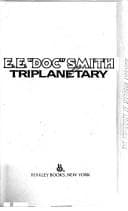
Human-alien encounters -- Fiction; Science fiction; Space warfare -- Fiction
One room of the Chemical Laboratory--in the corner most distant from
Administration--was separated from the rest of the building by a
sixteen-inch wall of concrete and steel extending from foundation to
roof without a door, window, or other opening. This was the laboratory
of the Chemical Engineers, the boys who played with explosives high and
low; any explosion occurring therein could not affect the Chemical
Laboratory proper or its personnel.
Entwhistle's main roads were paved; but in February of 1942, such minor
items as sidewalks existed only on the blue-prints. Entwhistle's soil
contained much clay, and at that time the mud was approximately six
inches deep. Hence, since there were neither inside doors nor sidewalks,
it was only natural that the technologists did not visit at all
frequently the polished-tile cleanliness of the Laboratory. It was also
natural enough for the far larger group to refer to the segregated ones
as exiles and outcasts; and that some witty chemist applied to that
isolated place the name "Siberia."
The name stuck. More, the Engineers seized it and acclaimed it. They
were Siberians, and proud of it, and Siberians they remained; long after
Entwhistle's mud turned into dust. And within the year the Siberians
were to become well and favorably known in every ordnance plant in the
country, to many high executives who had no idea of how the name
originated.
Kinnison became a Siberian as enthusiastically as the youngest man
there. The term "youngest" is used in its exact sense, for not one of
them was a recent graduate. Each had had at least five years of
responsible experience, and "Cappy" Sumner kept on building. He hired
extravagantly and fired ruthlessly--to the minds of some, senselessly.
But he knew what he was doing. He knew explosives, and he knew men. He
was not liked, but he was respected. His building was good.
Being one of the only two "old" men there--and the other did not stay
long--Kinnison, as a Junior Chemical Engineer, was not at first accepted
without reserve. Apparently he did not notice that fact, but went
quietly about his assigned duties. He was meticulously careful with, but
very evidently not in any fear of, the materials with which he worked.
He pelleted and tested tracer, igniter, and incendiary compositions; he
took his turn at burning out rejects. Whenever asked, he went out on the
lines with any one of them.
His experimental tetryls always "miked" to size, his TNT
melt-pours--introductory to loading forty-millimeter on the Three
Line--came out solid, free from checks and cavitations. It became
evident to those young but keen minds that he, alone of them all, was on
familiar ground. They began to discuss their problems with him. Out of
his years of technological experience, and by bringing everyone present
into the discussion, he either helped them directly or helped them to
help themselves. His stature grew.
Public-domain text, read in full here on John Shaqi.
Reviews
Reviews
No reviews yet
Be the first to share your thoughts on this work.
Join the Discussion
Join the discussion
Sign in to leave a comment or review.
Sign InorCreate an account