True Detective Stories from the Archives of the Pinkertons — John Shaqi
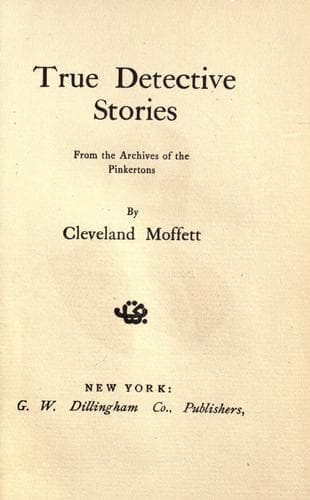
True Detective Stories from the Archives of the PinkertonsMoffett, Cleveland
History
True Detective Stories from the Archives of the Pinkertons
Moffett, Cleveland
Crime -- United States; Criminals -- United States; Detective and mystery stories, American
The gang's most desperate adventure befell in connection with the
attempt on the First National Bank of Pittston, Pennsylvania. This was
made late in the fall of 1875. The bank occupied a one-story building
covered with a tin roof, and the robbers decided to make the attack
from the roof. But there was a serious difficulty in the fact that in
case of rain coming any time after they had begun operations, water
might soak through the openings they had made and betray them.
Dunlap's ingenuity, however, was equal to this emergency; and each
night, after finishing their excavation, they carefully relaid the
sheets of tin that had been disturbed, protecting the joints with red
putty, which matched the roof in color. So well did they put on this
putty, that, although it rained heavily the very day after they began,
not a drop leaked through.
On the night of November 4 only one layer of bricks separated them
from the top of the vault, and it was decided to finish the work and
do the robbery that night. Two hours' hard labor with "drag" and
"jack-screw" sufficed to effect an opening, and Scott and Dunlap were
lowered into the vault. They found three Marvin spherical safes
protected by a burglar-alarm. But Dunlap was somewhat of an electrical
expert, and was able to so surround the burglar-alarm with heavy
boards as to render it of little or no danger. They experienced much
difficulty, though, in blowing open the safes. The first one attempted
yielded on the second explosion, and they secured five hundred dollars
in currency and sixty thousand dollars in bonds. The next one was far
more troublesome, not less than ten explosions being required to make
way into it. And just as the task was at last accomplished, and they
were on the point of seizing a great sum of money, there came a
warning call from Conroy, who was doing sentry duty on the roof, and
it was necessary to fly.
When Dunlap and Scott had been dragged out of the vault by their
associates, they were found scarcely able to run. During all the
twelve explosions of powder and dynamite they had never left the
vault, but, crouching behind the boards that guarded the
burglar-alarm, had remained within arm's length of explosions so
violent that they tore apart plates of welded steel and shook the
whole building. Worse than the shock of these explosions were the
noxious gases generated by them, which Scott and Dunlap had to
breathe. On coming out, their clothes were wringing wet with
perspiration, and they were so weak that their legs tottered under
them, and their comrades had to almost carry them for a time. But,
nevertheless, they managed to walk thirty miles that night, to Lehigh,
where they boarded a train to New York.
It was on this occasion that there was left behind in the vault the
air-pump which Robert Pinkerton afterward recalled so shrewdly to
Evans's disadvantage.
Public-domain text, read in full here on John Shaqi.
Reviews
Reviews
No reviews yet
Be the first to share your thoughts on this work.
Join the Discussion
Join the discussion
Sign in to leave a comment or review.
Sign InorCreate an account