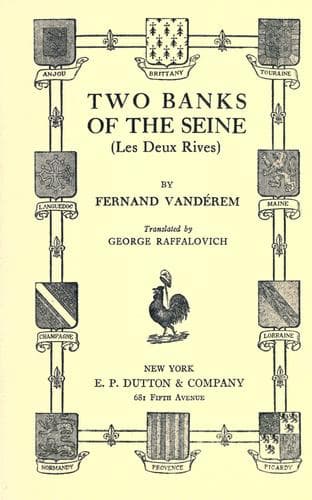
Two banks of the Seine (Les Deux Rives)Vandérem, Fernand
General
Two banks of the Seine (Les Deux Rives)
Vandérem, Fernand
Paris (France) -- Social life and customs -- 19th century -- Fiction
But the next day passed without his following up his intention. She was
not thinking about it any more. Why should he torment the poor child
with questions? Again, it was possible that she had told him the truth.
It might have been nerves, after all.
CHAPTER X
Nerves, that sort of "nerves" had been the trouble with Mlle. Raindal
for a whole week, as they were each year at the coming of the new
season.
When, one evening, a gust of warm breeze swept through the icy air, the
breath of advancing spring, her customary seriousness turned to
melancholy; and she waited for the inevitable trial of which this
perverse breath was the herald.
The universal magic which at that time threw all human beings into
confusion always struck her with special vigor. Neither her learning,
her reason nor her virile will-power could protect her. She fell a
languid prey to aimless fancies, which because of this very confusion,
allowed full play to the dreams of a chastity suddenly in revolt. She
passed from the most childish transports of tenderness to the most
fanciful flights of imagination. Tears of emotion came to her eyes;
sometimes she burst into sobs; the perfume of a flower, the tunes of the
street-organ below, or a beggar singing an old-fashioned romance in the
street caused her heart to be overfilled with sadness and gave her an
instinctive desire to lean her head on some robust shoulder.
The times of her weakness were precisely those when her hatred for Mme.
Chambannes was strongest and when she was most intolerant towards her
father. Their behavior seemed to her more revolting, more absurd, more
ludicrous than at other times. She found her consolation in mistaking
for contempt the jealousy which their happiness at being together roused
in her.
The acute consciousness of her own lack of attractiveness and of her
isolation led her to formulating wishes all of which were impossible.
Ah! were she but beautiful; were she simply one of those seductive women
over whom a few men disputed among one another and who could choose!
That she could be a woman, in short, excite desires, repulse assaults,
lead the warring life of her sex instead of turning white in an
unnatural existence, busy with mental work and the distractions of the
learned!...
Yet, lacking the needed charms, how could she change her life? How could
she try to please with her bony hands, discolored eyes and thin lips
which had pleased but once and then not more than for eight days?
Public-domain text, read in full here on John Shaqi.
Reviews
Reviews
No reviews yet
Be the first to share your thoughts on this work.
Elsewhere in the archive
Join the Discussion
Join the discussion
Sign in to leave a comment or review.
Sign InorCreate an account