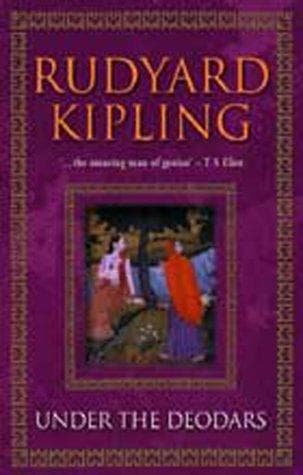
India -- History -- British occupation, 1765-1947 -- Fiction; Short stories, English
Corporal Slane was engaged to be married to Miss Jhansi M’Kenna,
whose history is well known in the regiment and elsewhere. He had his
Colonel’s permission, and, being popular with the men, every arrangement
had been made to give the wedding what Private Ortheris called “eeklar.”
It fell in the heart of the hot weather, and, after the wedding,
Slane was going up to the Hills with the Bride. None the less, Slane’s
grievance was that the affair would be only a hired-carriage wedding,
and he felt that the “eeklar” of that was meagre. Miss M’Kenna did
not care so much. The Sergeant’s wife was helping her to make her
wedding-dress, and she was very busy. Slane was, just then, the only
moderately contented man in barracks. All the rest were more or less
miserable.
And they had so much to make them happy, too. All their work was over
at eight in the morning, and for the rest of the day they could lie on
their backs and smoke Canteen-plug and swear at the punkah-coolies. They
enjoyed a fine, full flesh meal in the middle of the day, and then threw
themselves down on their cots and sweated and slept till it was cool
enough to go out with their “towny,” whose vocabulary contained less
than six hundred words, and the Adjective, and whose views on every
conceivable question they had heard many times before.
There was the Canteen, of course, and there was the Temperance Room with
the second-hand papers in it; but a man of any profession cannot read
for eight hours a day in a temperature of 96 degrees or 98 degrees in
the shade, running up sometimes to 103 degrees at midnight. Very few
men, even though they get a pannikin of flat, stale, muddy beer and hide
it under their cots, can continue drinking for six hours a day. One man
tried, but he died, and nearly the whole regiment went to his funeral
because it gave them something to do. It was too early for the
excitement of fever or cholera. The men could only wait and wait and
wait, and watch the shadow of the barrack creeping across the blinding
white dust. That was a gay life.
They lounged about cantonments-it was too hot for any sort of game,
and almost too hot for vice-and fuddled themselves in the evening,
and filled themselves to distension with the healthy nitrogenous food
provided for them, and the more they stoked the less exercise they took
and more explosive they grew. Then tempers began to wear away, and men
fell a-brooding over insults real or imaginary, for they had nothing
else to think of. The tone of the repartees changed, and instead of
saying light-heartedly: “I’ll knock your silly face in,” men grew
laboriously polite and hinted that the cantonments were not big enough
for themselves and their enemy, and that there would be more space for
one of the two in another place.
Public-domain text, read in full here on John Shaqi.
Reviews
Reviews
No reviews yet
Be the first to share your thoughts on this work.
Join the Discussion
Join the discussion
Sign in to leave a comment or review.
Sign InorCreate an account