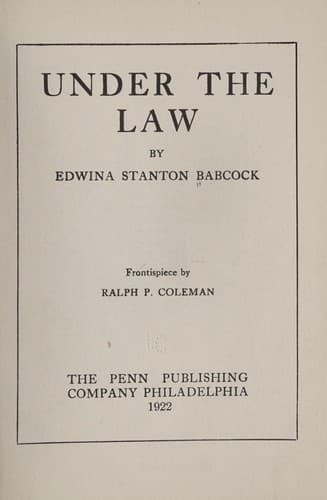
Amnesiacs -- Fiction; New York (State) -- Social life and customs -- Fiction; Trials -- Fiction; Young women -- Fiction
When the man-of-straw of outraged community virtue is dislodged the
court-room is redolent of prejudice and policy and pedantry and
plausibility; of many things that lie on each other in layers like
morning griddle cakes. But it seldom suggests atmosphere of health
and light and true cleanliness and earnest religious progressiveness;
of the earnest desire to administer true justice, of the earnest wish
to analyze specific examples of crime, to conserve all goodness, to
see straighter, more freely, with greater charity and more modern
scientific accuracy. Of these things few court-rooms smell.
It may have been the stale, dreary, intrenched and pompous atmosphere
of the Trout County court-room that finally drove the Minga Bunch from
their original intention of following Terence O'Brien to the last ditch
of his trial. Youthful enthusiasm and curiosity had long since died
out, leaving only a grudging sense of clan obligation, and the long
hours of reviewing circumstantial evidence, the cross-questioning of
this and that dull witness, the peering faces of the family of the
murdered man and the grim and relentless attitude of the jury, these
things had somehow robbed the circumstances of all their dramatic
values. The sight of Terry standing day after day in the pen, his
tow-colored hair always brushed the same way, his eyes always nervously
blinking the same way, and his dry mouth unable to testify in his
own defense, nettled the group of young people who had interested
themselves in his behalf. They had supposed the young accused would
rise suddenly and pelt the people with polemics. They had looked for
dynamics; they found only musty, fusty technique, sour looks of old
men, rigidities of convention and a bewildered effect of vital issues
lost in a grand tea-party of form and precedent.
Also, Watts Shipman disappointed them. Not experienced enough to
comprehend the poise and power that lay behind Shipman's calm, his
deferential giving way to his "distinguished opponent," his punctilious
observance of every known courtesy and tradition of the bar, they found
him tepid and unconvincing. They saw their great man as rather a simple
soul, apparently a negligible factor in the trial, apparently dominated
by the sleek, shining country counsel for the prosecution, and did not
know that those very simplicities were the earnest of his greatness.
The Bunch did not know the modern function of the lawyer to hold
himself rigidly from emphasis until all of the case has been digested.
To work out by the slow sifting of evidence the four sides of his
construction, the meticulous dotting of _I's_ and crossing of _T's_,
the subterfuge of the trained, technical response of witness when asked
certain specific questions; in short, the suave chicanery and subtle
craft that has been slowly built up around the narrowing arena where
two brains tourney for the life or honor of a prisoner--these things
were so much mortification of the flesh for the restive "Bunch."
Public-domain text, read in full here on John Shaqi.
Reviews
Reviews
No reviews yet
Be the first to share your thoughts on this work.
Elsewhere in the archive
Join the Discussion
Join the discussion
Sign in to leave a comment or review.
Sign InorCreate an account