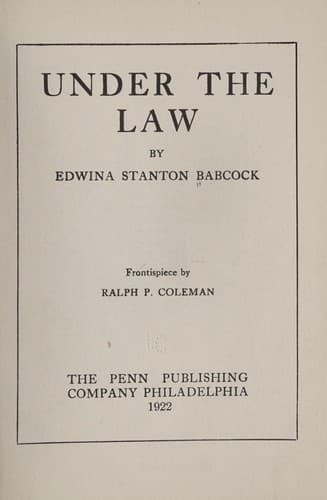
Amnesiacs -- Fiction; New York (State) -- Social life and customs -- Fiction; Trials -- Fiction; Young women -- Fiction
One by one the slow summer mornings of the trial dragged out. One by
one the "Bunch" dwindled down. Dora, trim in costume, desperate in eyes
and manner, might have noticed this defection; Sard, rather listless
and weary, saw it with scorn; Shipman, a slight glimmer in his eyes,
observed it. But Minga and Dunstan, coming religiously together every
day, both noted and registered it.
These two young people sat solemnly aloof in some communion of spirit,
waiting for some revelation, what, they hardly knew. But to an
imaginative onlooker they might have seemed slowly in their young hope
to dim; their vaulting belief might have appeared to such an onlooker
to become slowly filmed over by the long, long dust and dinginess, the
hanging cobwebs, the old parchments and papers, the pomps and vanities,
the emptiness and scaly dead skin of the Law.
But Dust is capable of explosion, and the two youngsters solemnly
sitting there on the last day of the case gradually felt themselves
slow fuses in some strange emotional bomb of their own planning.
This was somewhat heightened by a note that Dunstan carried in his
pocket. Once during the trial the lad took this out and showed it to
his companion; the two heads bent over it, two brown hands clasped in
solemn vow. Two solemn pairs of young eyes swore some consecration to a
so far half-planned venture.
Minga seemed restless and scornful. She kept her eyes on the
proceedings with the air of one who should say, "And this is what you
call 'justice'!"
At last came the summing up for the defense, and the great lawyer rose
and made his plea for the youth, who, sullen of eyes and unbelieving of
spirit, sat there. The court-room was full. Watts' fame had been passed
from mouth to mouth among the Trout County inhabitants and all up and
down the little villages of the Hudson the lawyer's mission had been
told. Private automobiles bumped along the country roads, jitneys from
the ferries and from other counties deposited their loads of citizens.
The country people, secure in their sense of collective virtue,
untroubled with modern analyses of crime and punishment, unhampered
with any passion for an adjustment of punishment to environment and
education, and keen for the Roman Holiday, came to see severe sentence
of imprisonment passed upon one who had forfeited his right to live
among them. The jury, clean as to shave, ostentatious as to watch
chain, some perfumed, some begoggled, one in hip boots, another in
pearl spats, all with an expression of wisdom and virtue rather droll
to anyone who knew the hidden chapters of their separate lives; in
fact, the Spoon River Anthology, numbering twelve picked verses,
filed into the jury box, and "twelve good men and true" mopped their
foreheads and tried to look unconscious.
Public-domain text, read in full here on John Shaqi.
Reviews
Reviews
No reviews yet
Be the first to share your thoughts on this work.
Elsewhere in the archive
Join the Discussion
Join the discussion
Sign in to leave a comment or review.
Sign InorCreate an account