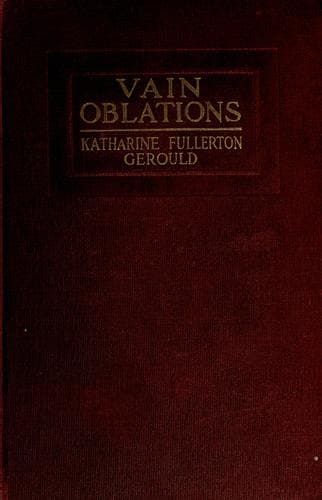
American fiction -- 20th century; Short stories, American
“There’s no point in saying it isn’t rum, because it is,” he murmured to
himself. “And _here_,” he added, looking about. There was no moral
support in those crimson walls, those great pier-glasses, those
insignificant writing-tables with red-shaded electric lights, those
uncomfortable tapestried armchairs. It wasn’t the setting to help you
through a crisis. He was in the quietest corner of the most essentially
respectable hotel in New York. There were plenty of them--scores--that
were incidentally respectable; but at the St. Justin respectability had
been cherished through years for its own sake, as more important than
the register, the cuisine, or the unimpeachable location that no
metropolitan progress could render inconvenient. As a very young
bachelor with virtually no family ties, he was not familiar with the St.
Justin. It wasn’t a place where you would expect to get the kind of
thing his kind of human being wanted. He couldn’t, for example, have
induced Marty to lunch there. They had lunched at Plon’s. It was a hotel
where you might be perfectly sure your grandparents had stopped. It was
natural that his mother should have selected it for their meeting, as
she hadn’t been in America for well over twenty years. But there was
less backing than he had expected, somehow.
Sitting uncomfortably in one of the corners by a writing-table (his back
to the window so that the familiar streets shouldn’t lure him too much
to flight), he took the privilege of the consciously crucial moment. He
reviewed his life. It was so very short, after all, that it was easily
reviewed. He was only a few months out of the university, and he was
just twenty-two. The insoluble was there to the point of being either
romantic or absurd, he didn’t know which. He had what so many young
people long for in vain, a mystery. He had amused himself occasionally
with monstrous hypotheses. But what real account could he give of
himself? What account, that is, of the sort that Marty Martin and his
like had by heart before they could spell? The most that he knew about
his parents--except that they were alive and in the tropics--was that
they banked in Honolulu and had some natural hold or other on Marty
Martin’s uncle. Marty Martin’s uncle had picked out Peter’s school and
his college for him, and was telegraphed for when Peter had
appendicitis. That was as near the parental relation as anything he had
known from experience. Lonely? Well, any fellow was lonely when the
other fellows all went trooping home for holidays; but loneliness he had
always frankly diagnosed as three-quarters pride. The fellows were
always glad to get back to school or college, he noticed. In any case,
he had stopped thinking about it much--his plight. That saved his
dignity. What he sat now vaguely dreading was the immense, the
cataclysmic downfall of his dignity. He tried to put the facts to
himself so simply that they should be as reassuring as a primer.
Public-domain text, read in full here on John Shaqi.
Reviews
Reviews
No reviews yet
Be the first to share your thoughts on this work.
Join the Discussion
Join the discussion
Sign in to leave a comment or review.
Sign InorCreate an account