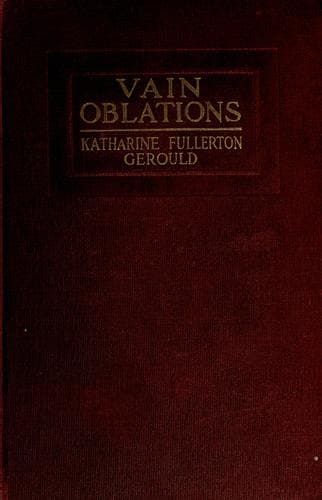
American fiction -- 20th century; Short stories, American
The country re-echoed the sentence, as it had re-echoed every shriek of
the evidence, from Atlantic to Pacific. The jury was out five
hours--would have been out only as many minutes if it had not been for
one Campbell, an undertaker, who had some doubts as to the sufficiency
of the “remains” disinterred to make evidence. But the marked
underclothing alone made their fragmentariness negligible. Campbell was
soon convinced of that. It was confused enough, in all conscience--he
told Upcher’s and my friend, Ted Sloan, later--but he guessed the things
the charwoman overheard were enough to convict any man; he’d stick to
that. Of course, the prosecuting attorney hadn’t rested his case on the
imperfect state of the body, anyhow--had just brought it in to show how
nasty it had been all round. It didn’t even look very well for him to
challenge medical experts, though a body that had been buried was a
little more in his line than it was in theirs, perhaps. And any
gentleman in his profession had had, he might say, more practical
experience than people who lectured in colleges. He hadn’t himself,
though, any call from superior technical knowledge to put spokes in the
wheel of justice. He guessed that was what you’d call a quibble. And he
was crazy to get home--Mrs. C. was expecting her first, any time along.
Sloan said the man seemed honest enough; and he was quite right--the
chain of circumstance was, alas! complete. Upcher was convicted of
murder in the first degree, and sentenced to death. He didn’t
appeal--wouldn’t, in spite of his counsel, and Sloan’s impassioned
advice: “Give ’em a run for their money, Filippo. Be a sport, anyhow!”
“Lord, man, all juries are alike,” was the response. “They’ve no brains.
I wouldn’t have the ghost of a show, and I’m not going through that
racket again, and make a worse fool of myself on the stand another
time.”
“But if you don’t, they’ll take it you’ve owned up.”
“Not necessarily, after they’ve read my will. I’ve left Rachel the
‘second best bed.’ There wasn’t much else. She’s got more than I ever
had. No, Sloan, a man must be guilty to want to appeal. No innocent man
would go through that hell twice. I want to get out and be quiet.”
The only appeal he did make was not such as to give Mr. Campbell any
retrospective qualms of conscience. The request was never meant to get
out, but, like so many other things marked “private,” it did. His
petition was for being allowed to act a certain number of nights before
his execution. He owed frightful sums, but, as he said, no sums,
however frightful, could fail to be raised by such a device.
“It would kill your chances of a reprieve, Filippo,” Sloan said he told
him.
“Reprieve?” Filippo had laughed. “Why, it would _prove_ me guilty. It
would turn all the evidence pale. But think of the box-office receipts.
There would have to be a platoon of police deadheading in the front
rows, of course. But even at that----!”
Public-domain text, read in full here on John Shaqi.
Reviews
Reviews
No reviews yet
Be the first to share your thoughts on this work.
Join the Discussion
Join the discussion
Sign in to leave a comment or review.
Sign InorCreate an account