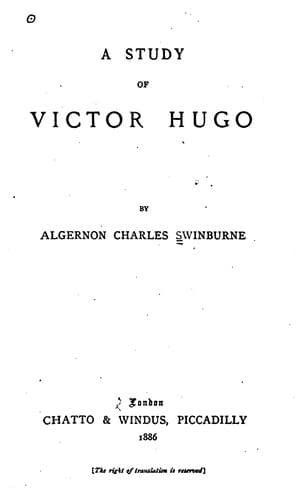
Hugo, Victor, 1802-1885 -- Criticism and interpretation
A judgment less terrible than what follows is that by which Dante long
ago made fast the gates of hell upon Nicholas and Boniface and Clement
with one stroke of his inevitable hand. The ghastly agony of the
condemned is given with all the bitterest realism of the great elder
anti-papist who sent so many vicars of Christ to everlasting torment for
less offenses than those of Mastai-Ferretti.
Lui se tourna vers l'ange en frissonnant,
Et je vis le spectacle horrible et surprenant
D'un homme qui vieillit pendant qu'on le regarde.
L'agonie éteignit sa prunelle hagarde,
Sa bouche bégaya, son jarret se rompit,
Ses cheveux blanchissaient sur son front décrépit,
Ses tempes se ridaient comme si les années
S'étaient subitement sur sa face acharnées,
Ses yeux pleuraient, ses dents claquaient comme au gibet
Les genoux d'un squelette, et sa peau se plombait,
Et, stupide, il baissait, à chaque instant plus pâle,
Sa tête qu'écrasait la tiare papale.
From the sentence passed upon him after the avowal extorted by the angel
of doom that he has none in the world above him but God alone on whom to
cast the responsibility of his works, not a word may be taken away for
the purpose of quotation, as not a word could have been added to it by
Dante or by Ezekiel himself. But about the eternity of his damnation
there is not, happily for the human conscience, any manner of doubt
possible; it must endure as long as the poem which proclaims it: in
other words, as long as the immortality of poetry itself.
This great and terrible poem, the very crown or coping-stone of all the
_Châtiments_, has a certain affinity with two others in which the
poet's yearning after justice and mercy has borne his passionate
imagination as high and far as here. In _Sultan Mourad_ his immeasurable
and incomparable depth of pity and charity seems well nigh to have
swallowed up all sense of necessary retribution: it is perhaps because
the portentous array of crimes enumerated is remote in time and place
from all experience of ours that conscience can allow the tenderness and
sublimity of its inspiration to justify the moral and ratify the
sentence of the poem:--
Viens! tu fus bon un jour, sois à jamais heureux.
Entre, transfiguré! tes crimes ténébreux,
Ô roi, derrière toi s'effacent dans les gloires;
Tourne la tête, et vois blanchir tes ailes noires.
Public-domain text, read in full here on John Shaqi.
Reviews
Reviews
No reviews yet
Be the first to share your thoughts on this work.
Elsewhere in the archive
Join the Discussion
Join the discussion
Sign in to leave a comment or review.
Sign InorCreate an account