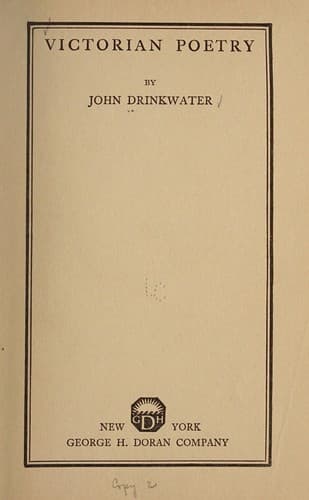
English poetry -- 19th century -- History and criticism; Great Britain -- History -- Victoria, 1837-1901
By the time the Victorian masters were beginning to write, the
English language, in the common use of it, had thus gone through
many adventures. Shaping itself to the typical or representative
national temper and aspirations from one age to another, it had been
dominantly in succession naïf, lusty, sacramental, witty and didactic,
high-flown in its excesses, and then learned and argumentative with a
leaven of yeoman correction in it under Wordsworth’s control. These
characteristics had in turn passed into the texture of English poetry,
and each had left something of its mark upon the future practice of
the art, complicating it and making it more and more subject to a
conscious literary deliberation. And now the example of Byron, with
his cosmopolitan and sometimes journalistic use of language, of Keats
with his intense brooding upon and requickening of an antique mode, of
Shelley with his almost fanatical demands upon the spiritual resources
of words, had further extended the range of poetic diction and at the
same time increased the difficulties in the way of original mastery.
These problems may seem to be artificial as here stated, and in a
sense they are so. Poetry is neither more nor less difficult at one
time than another, given the poet. But in the light of achievement
we may not unprofitably consider what are the conditions that have
governed that achievement from age to age, and so perhaps at least
correct some of the false and easy notions that we are apt to foster
about the art of our own time, when we approach it unset in its right
historical perspective. Tennyson and Browning and Arnold and the
Rossettis and Morris and Swinburne give us the delight of experience
perfectly expressed, and that is the first, and in a way the last,
thing to be said about them as poets. But, coming when they did, they
were confronted with special problems in the practice of their art,
and we lose nothing of our enjoyment of their essential poetry in
understanding what those problems were.
Public-domain text, read in full here on John Shaqi.
Reviews
Reviews
No reviews yet
Be the first to share your thoughts on this work.
Join the Discussion
Join the discussion
Sign in to leave a comment or review.
Sign InorCreate an account