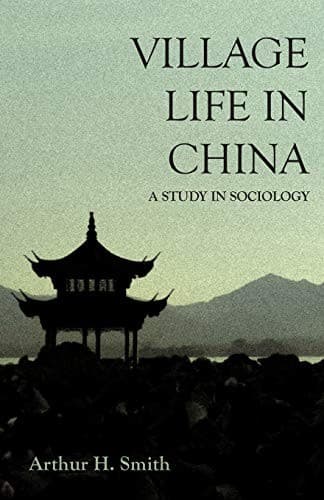
Village Life in China: A Study in SociologySmith, Arthur H.
General
Village Life in China: A Study in Sociology
Smith, Arthur H.
China -- Social life and customs; Villages
We have spoken of the literary bully as one of those most to be dreaded
in China. But there is another qualification which a bully may possess,
either with or without that of learning, which makes him an almost
irresistible enemy. If he belongs to a family, one or more members of
which are in official life and have a certain degree of power with the
official class, such a man is a dangerous foe. Instances are constantly
coming to light, not only in the native papers of China but also in
memorials in the _Peking Gazette_ (to which we have so frequently had
occasion to refer), showing how difficult, or rather how altogether
hopeless, it is to deal with such offenders. Even in cases of the most
wanton murder, there is always some way by which the matter can be
adjusted, and there is no assurance that the influential culprit gets any
real punishment at all.
The following instance which occurred more than a generation ago, in a
District near to that in which the writer lived for a long time,
illustrates the kind of proceedings to which reference is made.
During the eighteenth century there lived in that County a family named
Lu, one of the members of which attained to the lofty eminence of _Ko
Lao_, or Grand Secretary. A family of this class, especially if it should
be the only one of the sort in the District, exerts a commanding
influence, and it is necessary for the local Magistrate to conduct himself
discreetly, in order not to win the ill-will of such a powerful
corporation. It is well if he is able to collect from them even the
ordinary land-tax, which all the soil of the empire is supposed to pay.
It is related of this family that, upon one occasion having been ordered
by the District Magistrate to collect this tax, the local constable was
unable to do as he was told. Having been repeatedly beaten for his
delinquencies in this respect, he presented himself at the entrance of the
premises of his wealthy neighbour, and with earnest prostrations begged
the gatekeeper to intercede for him, and get the tax paid.
The elderly widow who was the manager of the establishment, having been
informed of this plea, ordered her cart harnessed, and proceeded to the
District Magistrate's yamên, for an interview. The official perhaps
entertained a wild hope that she had come to settle up her arrears of
taxes, and even planned to borrow a sum of money of her, but she soon
dispelled this idea, by telling him in so many words that she herself
required a "loan" of a certain number of thousands of tæls, which the
Magistrate was obliged to promise to get for her, at the earliest possible
moment. As she rose to take her leave, she remarked incidentally that her
gatekeeper had been much annoyed by some of the yamên underlings who hung
about the premises under pretence of wanting a grain-tax, adding that she
should expect to hear no more of such proceedings in future!
Public-domain text, read in full here on John Shaqi.
Reviews
Reviews
No reviews yet
Be the first to share your thoughts on this work.
Elsewhere in the archive
Join the Discussion
Join the discussion
Sign in to leave a comment or review.
Sign InorCreate an account