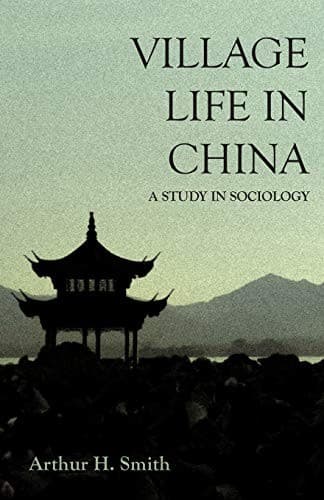
Village Life in China: A Study in SociologySmith, Arthur H.
General
Village Life in China: A Study in Sociology
Smith, Arthur H.
China -- Social life and customs; Villages
Of the details of Chinese weddings we do not intend to speak. There are
wide variations of usage in almost all particulars, though the general
plan is doubtless much the same. The variations appertain, not to the
ceremonies of the wedding alone, but to all the proceedings from beginning
to end. It is supposed that the explanation of the singular and sometimes
apparently unaccountable variation in these and other usages, found all
over China, may be due to the persistent survival of customs which have
been handed down from the time of the Divided Kingdoms. But very
considerable differences in usage are to be met with in regions not far
apart, and which were never a part of different kingdoms. The saying runs,
"Customs vary every ten _li_," which seems at times to be a literal truth.
In the south of China, as we have already remarked, the transfer of money,
at the engagement of a daughter, from the parents of the boy to those of
the girl, assumes for all practical purposes the aspect of a purchase,
which, pure and simple, it often is. But in other parts of China we never
hear of such a transaction, but only of a dowry from the bride's family,
much in the manner of Western lands at times. Vast sums are undoubtedly
squandered by the very wealthy Chinese at the weddings of their daughters,
and it is a common adage that to such expenditures there is no limit. But
in weddings in the ordinary walks of life, to which all but a small
fraction of the people belong, the impression which will be made upon the
observant foreigner will generally be that there is a great amount of
shabby gentility, a thin veneer of display beneath which it is easy to see
the real texture.
In this as in everything relating to Chinese usages it is impossible to
make general statements which shall at the same time be accurate. There
are regions in northern China where the money exacted from the family of
the future bridegroom is so considerable, that what remains after the
real bridal outfit has been purchased is a positive source of profit to
the father. There are also other districts where local custom requires the
bridegroom's family to give very little or even nothing at all for dowry,
but exacts heavily from the bride's family. There must be a large supply
of clothing, and bedding; even when at her own home the young married
woman must sew for her husband's family, and the one which furnishes the
bride is subject to a constant series of petty exactions.
Public-domain text, read in full here on John Shaqi.
Reviews
Reviews
No reviews yet
Be the first to share your thoughts on this work.
Elsewhere in the archive
Join the Discussion
Join the discussion
Sign in to leave a comment or review.
Sign InorCreate an account