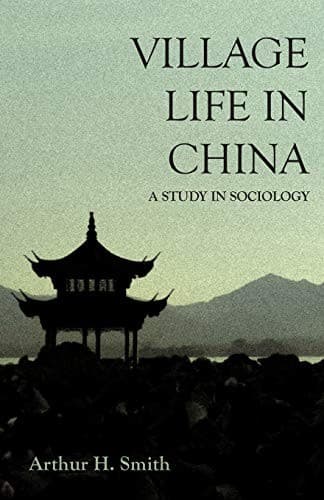
Village Life in China: A Study in SociologySmith, Arthur H.
General
Village Life in China: A Study in Sociology
Smith, Arthur H.
China -- Social life and customs; Villages
It frequently happens that the teacher is himself one of the literary army
who attends the examinations in hope of a degree. If this is the case, his
absences for this purpose will often prove a serious interruption to the
routine of the school. Some patrons appear to consider that this
disadvantage is balanced by the glory which would accrue to their school
in case its master were to take his degree while in their service.
Moreover, aside from the regular vacations at the feast times and
harvests, every teacher is sure to be called home from time to time by
some emergency in his own family, or in his village, or among his numerous
friends. Under these circumstances he provides a substitute if he happens
to find it convenient to do so. Such are nicknamed
"remote-cousin-preceptors" (_su-pai lao-shih_), and are not likely to be
treated with much respect. When the teacher is absent for a day, instead
of dismissing the school, he perhaps leaves it theoretically in the charge
of one of the older scholars. The inevitable consequence is, that at such
times the work of the school is reduced not merely to zero, but to forty
degrees below zero. The scholars simply bar the front door, and amuse
themselves in using the teacher's ferule for a bat, and the Trimetrical
Classic, or the Confucian Analects, for a ball. The demoralization
attending such lawlessness is evidently most injurious to the efficiency
of the school.
The irregularities of the master's attendance are more than matched by
those of his scholars. The pressure of domestic duties is such that many
poorer families on one pretence or another are constantly taking their
children out of school. To-day the pupil must rake up fuel, next week he
must lead the animal that draws the seed drill, a month later he is taken
for two or three days to visit some relatives. Not long after there is in
the village, or perhaps in some neighbouring village, a theatrical
entertainment, but in either case the whole school expects a vacation to
go and see the sport. As already remarked when describing theatricals, if
this vacation were denied they would take it themselves. Besides
interruptions of this sort, there are the spring and autumn harvests, when
the school is dismissed for two months and perhaps for three, and the New
Year vacation, which lasts from the middle of the twelfth moon to the
latter part of the first moon. But, extensive as are these intermissions
of study, the dog-days are not among them, and the poor pupils go droning
on through all the heat of summer.
Public-domain text, read in full here on John Shaqi.
Reviews
Reviews
No reviews yet
Be the first to share your thoughts on this work.
Elsewhere in the archive
Join the Discussion
Join the discussion
Sign in to leave a comment or review.
Sign InorCreate an account