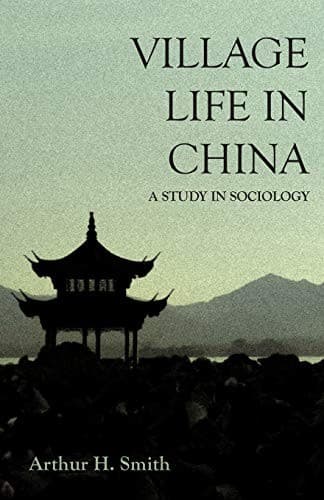
Village Life in China: A Study in SociologySmith, Arthur H.
General
Village Life in China: A Study in Sociology
Smith, Arthur H.
China -- Social life and customs; Villages
The next two days being devoted to the inspection of the wilderness of
essays and poems, the product of this first trial, the unhappy competitors
have leisure for much needed rest and sleep. On the morning of the fourth
day, the "boards are hung," that is, the list of those whose essays have
passed, is exposed. If the whole number of candidates should be 500--an
extremely moderate estimate for a reasonably populous district--the
proportion of those whose hopes are at once wrecked may be half. Only
those whose names are posted after the first trial can enter the
succeeding one. If the subordinates of the magistrate perceive that a
great many names are thrown out, they may come kneeling before the
magistrate, knocking their heads, and begging that he will kindly allow a
few more names to pass. If he happens to be in good humour at the moment,
he may grant their request, which is not in the smallest degree prompted
by any interest in the affairs of the disappointed candidates, but on the
important principle, that the fewer the sheep, the smaller will be the
crop of wool.
The only fee required for the examination is that paid for registration,
which amounts to about twenty cents. Not the name of the candidate only,
but those of his father and grandfather are to be recorded, to make it
sure that no one legally disqualified is admitted. The paper upon which
the examination essays and poems are written is of a special kind, sold
only at the yamên, and at a cost for each examination equivalent to about
ten cents, or fifty cents for the whole five examinations, but the
candidate must pay three-fifths of this amount for the first supply,
whether he is admitted to a further examination or not. If he is, he
becomes entitled to a rebate of this amount on his subsequent purchases.
On the fifth or sixth day, those who have been selected from the whole
number examined, again file into the examination hall, and are seated
according to their newly-acquired rank for the second test. Three themes
are again propounded, the first from the Four Books, the second from one
of the Five Classics, the third a poetical one, in a manner similar to the
first examination. A day or two is allowed for the inspection of these
essays, when the boards are again hung, and the result is to drop out
perhaps one-half of the competitors.
At the third examination the themes, which are given out somewhat later
than in the previous trials, are two in number, one from the Four Books,
the other poetical. About noon of this day, the magistrate has a meal of
vermicelli, rice, etc., sent to the candidates. By four in the afternoon
the hall is empty. After the interval of another day the boards are again
hung, indicating that all but perhaps fifty are excluded from further
competition.
Public-domain text, read in full here on John Shaqi.
Reviews
Reviews
No reviews yet
Be the first to share your thoughts on this work.
Elsewhere in the archive
Join the Discussion
Join the discussion
Sign in to leave a comment or review.
Sign InorCreate an account